Tampilkan postingan dengan label Books and Culture. Tampilkan semua postingan

Kamis, 08 September 2011

Impossible Possibilities: On Christian Smith’s The Bible Made Impossible

The most talked-about book of 2011 among evangelicals ought not to be Rob Bell’s Love Wins, but rather Christian Smith’s provocative and insightful attack on biblicism, The Bible Made Impossible: Why Biblicism Is Not a Truly Evangelical Reading of Scripture. I have a more formal, academic response to this book that I hope to write and publish in the near future. In the meantime, I want to take this opportunity to respond to Robert Gundry’s review in Books and Culture, and through that lens, to address some of the pros and cons of Smith’s book.

First, a few brief words about Smith’s thesis. The book is divided into two main parts: the first is his diagnosis, the second is the prescription. Smith argues that the position of biblicism is an impossible reading of scripture. By “biblicism,” he means “a theory about the Bible that emphasizes together its exclusive authority, infallibility, perspicuity, self-sufficiency, internal consistency, self-evident meaning, and universal applicability” (viii). He elsewhere identifies a “constellation” of ten assumptions or beliefs that constitute biblicism (4-5):
  1. Divine Writing: the Bible is inerrantly identical with God’s own words;
  2. Total Representation: the Bible communicates the totality of what God has to say;
  3. Complete Coverage: all issues are contained in the Bible;
  4. Democratic Perspicuity: any rational person can correctly understand the text;
  5. Commonsense Hermeneutics: the meaning is available through a plain, literal, face-value reading;
  6. Solo Scriptura (vs. sola scriptura): theology can be built directly out of the biblical text with no extrabiblical texts or frameworks;
  7. Internal Harmony: each texts is internally consistent with every other text;
  8. Universal Applicability: the teachings contained in the Bible are universally valid;
  9. Inductive Method: all Christian teachings can be learned by deriving them directly from the text taken in isolation; and
  10. Handbook Model: the Bible functions as a handbook for every aspect of Christian life.
Smith’s central claim is that this biblicist program is impossible to fulfill, and he demonstrates it through what he calls “pervasive interpretive pluralism.” The argument goes something like this:
  1. biblicism requires that the Bible’s teachings constitute a unified, coherent worldview for the entirety of Christian faith and practice (#2, 3, 7, 8, 10);
  2. biblicism further requires that these teachings are accessible to any rational person, apart from faith and apart from any religious tradition, who reads the text with care (#4, 5, 9);
  3. ergo, biblicism states that everyone ought to be in agreement about what the Bible teaches.
While (3) is obviously false, Smith piles on the examples of pervasive pluralism ad nauseam. He supplements his case with numerous additional problems, including the arbitrary ways biblicists relativize certain passages, the ineluctable need for extrabiblical concepts, and the way biblicist practice deviates from biblicist theory. The conclusion is clear: biblicism, as defined by Smith, is theological nonsense. It has no ground in scripture itself and is thoroughly self-defeating.

In the second part of the book, Smith presents his response to the problem. He doesn’t give a solution—though it occasionally reads like one—so much as present possible aspects of or avenues toward a more responsible evangelical hermeneutic. The primary suggestion is to adopt Barth’s christocentric hermeneutic, that is, to make the gospel kerygma of our reconciliation in Christ the lens by which we understand God’s word for us. Smith even affirms the need for a “canon within the canon” (116), to which I can only say: yes and amen! He even has a section titled: “Learning from Karl Barth’s Church Dogmatics” (121-26). Other suggestions include, for example, accepting ambiguities in scripture, refusing the temptation to harmonize, distinguishing dogma from doctrine from opinion, rejecting epistemological foundationalism, embracing elements of speech-act theory, and broadening the notion of biblical authority. All of these are good suggestions, though they fall short, in my opinion, of the kind of robust theological hermeneutic that evangelicals need.

Before turning to my own critiques, let’s take a look at Robert Gundry’s huffy response in Books and Culture, published under the title, “Smithereens!” To call this a review is being a bit generous. It has no intentions of being an honest analysis of Smith’s argument. Gundry opens by saying the book will “sizzle before it fizzles,” and then he goes on to talk about why it should fizzle. The reader of this review who hasn’t actually read the book might be misled into thinking that Gundry actually surveys Smith’s argument fairly, but this is false impression. Gundry spends all of three paragraphs describing Smith’s diagnosis of the biblicist dilemma, while spending the next 15+ paragraphs criticizing his “solution” to the problem. That’s not to say a three-paragraph summary isn’t potentially valid; Smith’s criticism of biblicism is indeed very simple. But it gives the impression that the point of the book is to give a systematic answer to biblicism, when this is most definitely not the case, as the book states explicitly. As Smith put it in his response to Peter Leithart, “In short, the first half of my book needs to be addressed and answered directly for its main critical argument. The second, constructive half of the book might be temporarily ignored, as far as I’m concerned.” Gundry asks: “How then does Smith propose to solve the problem of pervasive interpretive pluralism?” But this completely overlooks Smith’s qualification at the start of the second half: “The ideas in the following pages do not offer a fixed package of solutions to the problems raised in previous chapters” (97). Suffice it to say that Gundry’s piece is an untrustworthy guide to the book purportedly under review. It is a very smug essay, full of the self-congratulatory “gotcha” moments that one finds in the writings of reasonably intelligent people who dismiss works critical of their views by distracting their readers from a book’s forceful and valid insights. Readers are advised to judge Smith’s work for themselves.

Where Gundry is wrong, he is dead wrong. He seems to endorse deriving universal ethical laws from the Bible. He finds it suspicious that “Smith repeatedly cites the fate of the unevangelized as an open question and refers again and again to the gospel of God’s reconciling the world to himself through Christ but says nary a word about divine judgment and the lostness of unbelievers despite the apostle Paul's declaring that for their salvation people have to believe in Christ.” Why do conservatives persist in making mercy and judgment antitheses in God, as if God is bound to the kind of antinomies that govern creaturely life? Not surprisingly, he is appalled to hear Smith question the dogmatic status of the “penal satisfaction” theory of atonement: “Sorry, but victory without the penal is pyrrhic.” But this only confirms Smith’s point, that evangelicals have illegitimately elevated what are doctrines at best into infallible dogmas. Gundry is also wrong to side with Van Til against Barth, but that goes without saying.

One of the snarkier moments occurs when Gundry claims to show how Smith employs in his own book the very Scottish commonsense realism and Baconian inductivism that the latter criticizes. “Welcome to Scottish commonsense realism and Baconian inductivism redux,” Gundry writes. “Thanks to Smith they've made a comeback.” This is one of the worst “gotcha” moments in the review, since it is both factually wrong and misses the point. First, to demonstrate that Smith is employing these very methods, Gundry would have to show that his approach actually claims to achieve a purely objective (non-subjective) truth about the world. But Smith nowhere claims such a thing. Gundry equates these methods with an extremely broad scientific method of examining data. If Gundry were correct, then every scientific study would have to be committed to a Baconian philosophical framework, which is of course ridiculous. Not only is Gundry’s attempt at a comeback factually wrong, it is also useless. Simply showing how these methods might be found in the book says nothing about the validity or invalidity of these methods for biblical interpretation. Gundry admits as much when he adds, “To say so is neither to deny nor to affirm his thesis.” Okay, so what’s the point? There is only one point: to distract from the real argument of the book with a banal observation meant to impress the Books and Culture reader (Gundry must assume such readers are not very intelligent), so that he or she forgets Smith was trying to make a serious observation.


But even broken clocks are right twice a day. Some of Gundry’s blows actually hit their mark, and it would be unfair not to point out where he’s right. But let’s be clear: Gundry provides nothing to undermine Smith’s critique of biblicism in the first half of the book. The review’s criticisms all pertain to the “solution” that Gundry thinks Smith is trying to propose. On that, Gundry is quite right to question whether a “christocentric hermeneutic” would really curtail pervasive interpretive pluralism. “You also have to ask whether a christological reading doesn't produce its own such pluralism,” he says. Gundry essentially makes this one point again and again in different ways. The ancient creeds “haven’t put a stop to pluralism outside biblicist circles any more than inside them. Nor has a strong teaching office. Not even pronouncements of the Roman Catholic Magisterium have stopped it among theologians, clergy, and lay people of that communion, not to detail disagreements among Roman Catholics on the Magisterium itself.” And later, he responds to Smith’s point about Christ being present outside of scripture by asking, “are these extrabiblical presences of Christ any less subject to pervasive interpretive pluralism than is biblicism?” All of this is quite true, and I’ll come back to it later.

Gundry is also entirely correct to question Smith’s claim that his recently becoming Roman Catholic is “only partly related to the issues raised here” (xiii). While it is true that the critique and the constructive suggestions are both valid for evangelical Protestants, it is certainly suspect when a book like this appears the same year that Smith publishes another book with the title, How to Go from Being a Good Evangelical to a Committed Catholic in 95 Difficult Steps (Eugene, OR: Cascade, 2011). It’s hard to read The Bible Made Impossible and not feel like it is a covert argument for why evangelicals should become Catholic. For instance, at one point Smith says that American evangelicals need to “spend the time needed to think matters through carefully, creatively, and in interaction with the larger, longer Christian tradition. . . . The last thing American evangelicalism needs is more autonomously impulsive reformist action and more organizational and identity fragmentation” (96)! Combine this with his concluding remark about the need for “a stronger hermeneutical lens and ecclesial teaching office” (177; emphasis added), and you have the basic building blocks for a conversion to “evangelical Catholicism.”

As true as these criticisms are, they are not by any means the most important points to raise in objection to Smith’s book. First, Smith’s diagnosis, while generally on target, fails to zero in on the real source of the biblicist dilemma. He admits that not everything on the long list of biblicist characteristics falls under his critique. And he often appears to confuse issues that need to be differentiated more sharply, giving the impression that kitschy books like Gardening with Biblical Plants can be placed alongside the “Three/Four/Five Views on X” that Smith rightly sees as more problematic for biblicism. Second, the constructive suggestions that he provides, while helpful, do not nearly go far enough. He acknowledges this, but that’s not sufficient. We need something more robust. But it’s more serious than that. Not only do they stop short; they also go in the wrong direction. Let me explain.

Both Smith and Gundry, if I’ve understand them correctly, are opposed to pervasive interpretive pluralism (hereafter PIP). Though I must admit that it’s not entirely clear for either one. Certainly Gundry thinks that Smith is against PIP, and he seems to share Smith’s concern about this problem. But is Smith opposed to it himself? Throughout the book he refers to PIP as a problem for biblicism. To use analytic terminology, PIP is a defeater for biblicism. The question is whether PIP is a problem as such for Smith. I agree with Gundry that this is the general impression from the book, and it seems to be confirmed by the conclusion, where Smith says that “biblicism collapse[s] under the weight of the pervasive interpretive pluralism that biblicism itself generates” (173; emphasis added). This is one of the many slips in the book. It is a factually erroneous statement. If biblicism generates PIP, then it would have to be as early as the biblical text itself—more than that, as early as human civilization! If anything, biblicism is a (failed) response to PIP, not its cause. Gundry goes so far as to suggest that PIP might be caused by too much nonbiblicism in the past—as if everyone would agree with his paleofundamentalism if only ancient Christians had been more biblicist!—but that’s equally as erroneous.

The real issue is the assumption by both that PIP is a problem at all that needs to be “fixed” or curtailed. What is perplexing about Smith’s book is that he fails to draw the logical conclusion that PIP itself needs, in some sense, to be embraced. For surely this is what the book leads the reader to expect at numerous points. For instance, he rightly affirms, over against the pursuit of pure objectivity, the active role of the reading subject in the interpretation of scripture: “How else could humans possibly know truth, other than to involve themselves as personal subjects in the discerning and understanding of it?” (114). He seems to acknowledge in these pages the fact that subjective involvement is a universal feature of interpretation. But if that’s the case, then PIP is simply the natural consequence of allowing everyone to read and interpret scripture—which it is. Consequently, on Smith’s own terms, the only way to combat PIP is to fully submit one’s subjectivity to the normative authority of an ecclesial magisterium, or to keep Bibles out of the hands of the laity. Put simply, if Smith really thinks we must overcome PIP, then his argument necessarily requires that one “become Catholic (as I have done) or Eastern Orthodox.” However, if he’s only concerned about moving past biblicism—and thus embracing PIP within a postfoundationalist christocentric hermeneutic—then many of these problems disappear, including the basis for most of Gundry’s criticisms.

Pervasive interpretive pluralism is not a problem to be fixed; it is a fact to be accepted, even a blessing to be embraced. Smith comes so close to making this very point, but he holds back. He has an entire chapter on the need to accept the Bible as it is, with all its ambiguities and complexities and contradictions. He writes about the need to embrace the subjective nature of all interpretation. It ought to follow that PIP is itself something to affirm as part of the creaturely relation to God. This is what Smith should have argued in his book. Not only that PIP is a defeater for biblicism, but that we need a hermeneutic which embraces the radical multiplicity and heterogeneity of our interpretations.

As helpful and insightful as Smith’s book is, it falls short of what the book could and should have argued. Throughout the book he criticizes the “handbook” attempt to derive universally-applicable ideals and principles from the biblical text that will govern every aspect of our life. And yet there is no corresponding suggestion that our understanding of scripture ought to embrace the plurality of historical contexts in which scripture is read and interpreted. Opposing biblicism is one thing; affirming a radically open hermeneutic that gives a positive place to “pervasive pluralism” is something quite different. The pieces are in place for making this move within Smith’s book. A christocentric “canon with the canon” is indeed the correct starting-point. One only needs to recognize that that which remains “outside” this inner canon are the multiplicity of cultural-historical contexts and conceptual forms. If christocentricity constitutes the “inner” canon, then a kind of pneumatocentricity must constitute the “outer” canon. Put differently, the kerygma of Jesus Christ establishes the unity, while the cross-cultural movement of the Spirit establishes the diversity. Together, we have the theological basis for a hermeneutic that embraces pervasive pluralism without resulting in a vicious relativism.

Sabtu, 26 Juli 2008

Noah’s ark: history, theology, and pop culture

In a recent feature article (“Readers of the Lost Ark”) in Books and Culture, Crystal Downing and Sharon Baker write about Noah’s ark. Their article is really two articles in one: the first half is a very illuminating account of the way people have interpreted the ark narrative throughout history, while the second half is a discussion of the 2007 film, Evan Almighty. The two halves are connected by a central thesis: “Evan Almighty maintains an ancient tradition of Ark midrash: an appropriation of the flood story that reflects the needs and contexts of its readers.” They begin, therefore, by showing just how the flood story has been interpreted and appropriated throughout history, before turning to show how the film fits squarely within that tradition.

The article is illuminating in many ways. In the first part, they begin by noting the Ancient Near Eastern texts which were themselves appropriated to form the story we have in Scripture. But the authors are not content with simply identifying historical facts. Nor are they content with focusing only on Jewish and Christian midrash. The following is especially insightful:
The ark represents salvation, its God-guided enclosure protecting believers from the profane: that which is outside sacred space, as implied by the etymology of pro-fane ("beyond the temple"). In his classic study The Sacred and Profane: The Nature of Religion, Mircea Eliade describes the profane with water-like terms, arguing that sacred space operates as a cosmic center in the midst of "the formless fluidity of profane space." This may explain why, in Muslim tradition, Noah's ark sailed seven times around the holiest place in Islam: the place of the Ka'aba in Mecca, a huge cube toward which Muslims still turn during prayer. The ark identified the sacred center to which pilgrims journey as they emulate Noah's pilgrimage, circling the Ka'aba seven times on foot. By the 7th century, all three Abrahamic faiths had reached an agreement about the site of the ark's landing: a peak in Armenia where a "Cloister of the Ark" was built by Nestorian Christians, followed by a Muslim sanctuary allegedly constructed out of wood from Noah's vessel.
The authors follow this with an incredibly interesting journey through Christian history, showing how the story of the flood impacted Christian theology, art, iconography, and Corpus Christi plays. The first known play was in 1376 as part of the celebration of the Feast of Corpus Christi. These processions evolved over time so that various guilds would carry biblical images which represented their particular craft: “water-drawers would tote an image of Noah's ark, goldsmiths would shoulder the Ark of the Covenant.” Eventually, these processions turned into complete dramas, such as the Wakefield Noe, the most famous of the Corpus Christi ark plays.

What is clear throughout the history is that, as the authors state, “there is something about the flood story that seeps into our chests. We love its symbolism of sacred space saving us from the formless fluidity of the profane. Perhaps this is why, throughout the history of Christendom, readers have built and stocked the ark with elements reflective of their own cultural values.” This process of re-imagining the ark—that is, re-narrating the story for a new place and time—continues today. In support of this point, Baker and Downing conclude their article with a theologically informed interpretation of Evan Almighty. They show how the film’s modern take on the biblical story stands squarely within the tradition of interpreting the ark for one’s own time. In the case of Evan Almighty, that means viewing the flood as a kind of filmic-biblical version of Hurricane Katrina—a symbol of the environmental damage wrought by humankind. The ark still serves as a symbol of salvation, but this time with an emphasis on acting in a way that considers the lives of others. The ark is reimagined as an acrostic: “A-R-K, representing Acts of Random Kindness.” However indicative of Hollywood tackiness, the film still falls within this long interpretive tradition. And the authors do a nice job of showing how Evan’s character fits the pattern of biblical prophet.

All of this raises some interesting questions:
  • What are some other ways the flood story might be reimagined for today? What are the contexts today, besides environmentalism, which could benefit from a fresh hearing of this story?
  • A key impetus for the flood in the Genesis narrative is the prevalence of violence. Since we live in a world getting more violent by the day, what might this story teach us today?
  • In a post-tsunami, post-Katrina world, how might the flood story be either good news or bad news (or both) for people today, particularly those affected by these natural disasters?

Selasa, 22 Juli 2008

Randall Balmer on the scandal of evangelical politics

Randall Balmer has a review in Books & Culture of Ron Sider’s most recent book on The Scandal of Evangelical Politics: Why Are Christians Missing the Chance to Really Change the World? His review is a rather critical one, summed up well by the title: “A Failure of Nerve.” Balmer censures Sider for three reasons: (1) Sider does not identify any real scandal worthy of the book’s title; (2) Sider’s positive proposals are far less radical and significant than they could be, particularly in light of Sider’s earlier work (e.g., Rich Christians in an Age of Hunger); and, most importantly, (3) Sider locates the promise of “changing the world” in the act of evangelicals “doing politics.” Regarding the last of these three charges, Balmer quite rightly states:

Change the world by "doing politics"? That's a remarkable statement, especially from someone who hails from the Anabaptist tradition. Anabaptists understand better than most Jesus' renunciation of earthly power and his declaration that his kingdom was not of this world. The cautionary lesson from the sorry saga of the Religious Right lies not in the movement's political ineptitude, egregious as that has been, but in its devaluing of the gospel in the quest for political influence. The New Testament suggests that religion always functions best from the margins of society and not in the councils of power—a principle strongly reinforced by an overview of American history. Whenever people of faith begin grasping after power, they lose their prophetic voice. This was no less true of mainline Protestantism in the 1950s, tethered as it was to white, middle-class Eisenhower suburbanism, than it has been of the Religious Right in the decades surrounding the turn of the 21st century.

Am I arguing that people of faith should not make their voices heard in the arena of public discourse? On the contrary: I believe that public discourse would be impoverished without those voices. But we should never delude ourselves into thinking that "doing politics," to use Sider's phrase, represents the highest or the best or even a proximate expression of our prophetic mission. A prophet always stands at the margins, calling the powerful to account. Misplaced allegiance to political power represents a form of idolatry, and the failure of evangelicals generally and the Religious Right in particular to call politicians to account, especially those politicians they propelled into office, is the stuff of, well, scandal.

In this latest issue of Book & Culture, you can also read a review of Balmer’s most recent book, God in the White House: How Faith Shaped the Presidency from John F. Kennedy to George W. Bush.

Jumat, 27 Juni 2008

Is mysticism the way to pluralism?

Not according to William Harmless in his new book, Mystics, reviewed in Books & Culture by Nathaniel Peters:

The word mystic does not bring to mind edifying images for most Christians these days. It smacks of a vapid, Southern California mindset, readily exploited by marketers of tea and juice and such. For the more historically minded, mystic might suggest the wild-haired, unwashed visionaries off in the wilderness—not, in other words, something of much concern to everyday believers as they balance their finances or play catch with their kids.

But true mystics are far from amorphously spiritual. As Bernard McGinn has put it, “no mystic (at least before the present century) believed in or practiced ‘mysticism.’ They believed in and practiced Christianity (or Judaism, or Islam, or Hinduism), that is, religions that contained mystical elements as part of a wider historical whole.” McGinn’s work serves as the starting point for William Harmless, a professor of theology at Creighton University, whose new book Mystics is a walk through the lives and teachings of eight great mystics: Thomas Merton, Bernard of Clairvaux, Hildegard of Bingen, Bonaventure, Meister Eckhart, and Evagrius Ponticus from the Christian tradition, as well as the Sufi poet Rumi and the Buddhist divine Dogen.

. . . Harmless says that his goal is “to take up and to take on the widespread claim that ‘all religions are all the same at the top,’ that ‘mystics are all experiencing the same thing.’ … I hope I’ve shown here … that such claims are simply nonsense, that those who make them have simply not done their homework.”

Kamis, 26 Juni 2008

Christian Wiman: resurrection is empty without the cross

Books & Culture has an interview with poet and essayist Christian Wiman conducted by Aaron Rench. Wiman is the editor of Poetry magazine, which gives him a place of central importance in the life of American poetry today. He has a collection of essays out entitled, Ambition and Survival: Becoming a Poet, which I recommend. You can read one of them, “The Limit,” here. He also has a number of poems available online.

The interview covers a number of important topics. He discusses the problem of poetry’s conflicted relationship with modern society, the “reek” of overambition, and his own complicated relationship with Christianity. In one of his answers, he states: “I do think a life in poetry is a calling, but for a long time I was unwilling to admit that the call might come from God.” But the most profound response comes in his discussion of art and sentimentality. Rench’s question is in bold, followed by Wiman’s response.

In the chapter on poetry and religion you start off by saying, “Art is like Christianity in this way: at its greatest, it can give you access to the deepest suffering you imagine.” Would you say this is why art resists sentimentalism?

Well, the adjective is important there: greatest. I was trying to point out how the highest moments of art can at once enact our deepest sufferings and provide a peace that is equal to them, and how this is similar to (though lesser than) what I understand to be the deepest truth of Christianity. The peace does not eliminate the sorrow or the tragedy: great art acknowledges intractable human suffering, and Christianity's promise of resurrection is empty without a clear, cold sense of the cross.

So yes, art does resist sentimentality, as does, at its best, Christianity.

That said, there are all kinds of art, and all kinds of Christianity, that include sentimentality—and are not necessarily vitiated because of that. I love many novels, poems, and pieces of music that have obvious sentimental moments or characters in them, and it seems to me that the daily life of a Christian can’t be lived with the kind of austerity I’m describing above. Some people, those inclined to severity and sternness, actually need more sentimentality in their lives, and others who are over-inclined to frivolity and vapid cheerfulness need to be dropped more often into the depths of their beliefs. Art is a good means for achieving both of these.

In this response, Wiman identifies the absence of a theologia crucis as the basis for modern American Christianity’s rampant sentimentalism. Beyond the saccharine lyrics of CCM and the books by people like Bruce Wilkinson, we might expand sentimentalism to include, for example, the prosperity gospel found on TBN and the comfortable, bourgeois character of American evangelicalism in general. All of these things are manifestations of a resurrection “without a clear, cold sense of the cross.” As a result, they are “empty.”

I’ll close by offering one of his more explicitly “religious” poems (for lack of a better description), “Every Riven Thing”:
Every Riven Thing

God goes, belonging to every riven thing He’s made
Sing his being simply by being
The thing it is:
Stone and tree and sky,
Man who sees and sings and wonders why

God goes. Belonging, to every riven thing He’s made,
Means a storm of peace.
Think of the atoms inside the stone.
Think of the man who sits alone
Trying to will himself into the stillness where

God goes belonging. To every riven thing He’s made
There is given one shade
Shaped exactly to the thing itself:
Under the tree a darker tree;
Under the man the only man to see

God goes belonging to every riven thing. He’s made
The things that bring Him near,
Made the mind that makes Him go.
A part of what man knows,
Apart from what man knows,

God goes belonging to every riven thing He’s made.

Minggu, 22 Juni 2008

The problem of evangelicals and art

In his online column for the January/February issue of Books & Culture, John Wilson discusses the Iron & Wine concert at Wheaton College that I mentioned earlier on this blog. I am pleased to find out that he listens to good music, including the Decemberists and Calexico. But I was disturbed by his conclusion. He discusses the song “Jezebel,” one of Sam Beam’s most beautiful songs, which he apparently had not heard prior to the concert. He then writes:

"Who's seen Jezebel," he sang, and the song built from that opening to the high point of intensity in the entire concert. Jezebel, in this telling, is a scapegoat, "born to be the woman we could blame." (Where have we heard that before?) But she's more:

Who's seen Jezebel
She was gone before I ever got to say
Lay here, my love, you're the only shape I pray to
Jezebel

So read the lyrics to "Jezebel" I found next day on the web (hence, of course, subject to error), from a 2005 EP that I haven't heard, Woman King, and that I'll now check out. What I heard Friday night—when Sam Beam's voice became more passionately intense than at any other point in the show—was this: "you're the only God I pray to." Maybe I misheard. (If you were at the concert, please correct or confirm my impression, though the point is pretty much the same in either case.) And as I sat, eyes still closed, musing while the last vibrations of the song faded away, I heard thunderous applause. What were they applauding? The sentiments of the song? Or maybe just the Iron & Wineness of it. Much as I love women, and Woman, and one woman in particular, I couldn't join in. But I won't stop listening.

The actual words that Beam sang are finally unimportant, though for the sake of this post, let’s just assume that he heard him rightly. The fact that Wilson could not applaud reveals a profound misunderstanding of art. For Wilson and many evangelicals, one can only applaud a musician with whom one shares a similar “worldview” or religious posture. Wilson cannot applaud because Beam’s lyrics (at least seemingly) subvert Christian belief.

This is a profound mistake and it has a long history. Evangelicals tend to see everything in propositional-didactic terms: the Bible is a storehouse of facts, the sermon is an education in doctrine and Bible, movies and novels are opportunities to teach morality, and music is reduced to the “worldviews” (currently, my least favorite word in the English language) expressed in the lyrics. Is it any wonder that evangelicals have consistently rejected, ignored, or misunderstood visual art, poetry, iconography, sacraments—things which do not lend themselves to propositional interpretation? Obviously, I am oversimplifying things, but evangelicals have long had a troubled relationship with art. And this column exemplifies the problem. So why applaud Iron & Wine? Well, should I dispense with Ingmar Bergman because his films challenge the existence of God and are at times clearly atheistic? Should I avoid Philip Pullman’s trilogy because he portrays the church as the enemy? Should I reserve my admiration for authors who depict Christianity favorably? Should I always listen to but not applaud musicians who reject God?

Wilson’s final line is typical: “I couldn't join in. But I won't stop listening.” Evangelicals are all about knowing what’s out there—reading the same books, watching the same movies, listening to the same music—but always approaching it from a predetermined position. Evangelicals have a really difficult time actually engaging the world, and by engaging I mean entering into a real dialogue on the basis of a “hermeneutics of charity.” Evangelicals already know what is right and what is wrong, and all they need to do is locate which box a particular artist or intellectual belongs in. (Wilson is better than this, but many evangelicals are not.)

The world for many evangelicals is basically black and white. But art is all about the gray, and herein lies the source of the difficulty: how can an evangelical really appreciate art when the evangelical posture toward the world is one that is anti-aesthetic? Evangelicals see things in terms of propositional and moral truth; but art is not primarily concerned with the propositional and/or the moral. Art is not teaching by a different means. If we think of the classic transcendentals, evangelicals are perfectly at home with Truth and the Good—with logic and action—but not with Beauty.

I am willing to grant that Wilson approaches art charitably—at least more charitably than most—but I am concerned about the way this column approaches Iron & Wine propositionally: he expects the music to teach something, and what it teaches is determinative for whether he can truly appreciate it. Perhaps I am being uncharitable to Wilson, but I am only trying to take him at his word. Instead of him saying, “I couldn’t join in, but I won’t stop listening,” I would rather have seen him say, “I joined in the applause, acknowledging Beam’s great talent and important voice within the world of contemporary art. And I will continue to listen, while engaging in thoughtful, charitable dialogue about his music.” Something more along those lines would have set a better example for evangelicals.

We need Christians who will listen, not only to the words on the page but also to the artists and the themes implicit in their works of art. In “Jezebel,” one might explore the way Christians throughout history have often sought to silence women or paint them in negative terms. Perhaps this is an issue relevant to Beam. But this may be going too far. Beam is a storyteller, and like the Decemberists, he tells stories in which he is not always the subject of the “I” in the song. I think it’s quite plausible that “Jezebel” is written from the perspective of an anonymous protagonist, someone who is in love with a woman whom he has lost to the “dogs.” Love is often described in terms of worship, and Beam might be playing off that idea—combining it with the figure of Jezebel to distinguish his song from the cliché.

The point is, we need to listen charitably and engage with an open mind, and not simply pass judgment. We need evangelicals who can empathize with and appreciate artists who do not share their same theological commitments. In short, we need evangelicals who are comfortable in the gray beyond the black and white.

Sabtu, 16 Februari 2008

C. S. Lewis and the Remythologization of Christianity

It may be that C. S. Lewis’ greatest legacy will be his remythologization of Christianity. He is well known for his (flawed) apologetics and popular children’s literature, but it is the “baptized imagination”—instigated by the works of George MacDonald, according to Lewis—which infuses all of his works that is really the mark of his genius. I think we are now in a position to best appreciate this aspect of Lewis’ work. His apologetics have faded from view, and Hollywood has co-opted his Narnia books for huge profit. This is the perfect time to rediscover his lesser known works or to read his familiar books (such as the Chronicles of Narnia) in a new way.

Enter Dr. Michael Ward. I first met Michael during my time at Wheaton College. I was a teacher’s assistant for Wayne Martindale, one of the foremost American scholars of Lewis. My knowledge of Michael’s work was augmented by a trip during the summer of 2003 to Oxford, where we heard lectures on Lewis and visited The Kilns, among other places.

In his new book, Planet Narnia, Dr. Ward argues the following thesis: Lewis based each of the seven Narnia books on one of the seven medieval heavens. As you will recall, the medieval church accepted Ptolemy’s model of the solar system, in which the Earth was at the center. Each of the planets had spiritual significance, and each influenced life on Earth in some divinely ordained way. In this era, astronomy and astrology were indistinguishable. The mythology of the seven heavens was integral to medieval Christian faith—hence the church’s vehement rejection of the Copernican system—and Lewis harbored a secret love for this mythology over against the materialistic, scientistic conception of the heavens that now dominates the modern era. Ward brilliantly shows how each of the Narnia books corresponds with one of these heavenly bodies, and he builds his case not only on careful readings of the books, but also through analysis of Lewis’ more “academic” texts, such as The Discarded Image.

In a new article for Books & Culture, “C. S. Lewis and the Star of Bethlehem,” Ward discusses Lewis’ disdain for the disenchanted “mythology” of modernity in favor of the more Christian—even if less scientifically accurate—“mythology” of the seven heavens. His fiction, including the Ransom trilogy as well as the Narnia books, and his poetry were thoroughly interested in what Lewis himself called “the whole planetary idea as a mythology.” Ward writes:
Since the Copernician revolution, the heavenly bodies had been steadily evacuated of spiritual significance until they were regarded as no more than large aggregations of rock or gas. Readers of Narnia will remember an exchange in The Voyage of the "Dawn Treader" during which Eustace is rebuked by Ramandu for claiming that "In our world a star is a huge ball of flaming gas": "Even in your world, my son, that is not what a star is but only what it is made of." Because the pre-Copernican model of the cosmos viewed the planets as more than merely material it was a model worth keeping in mind. It was, in this sense, a more Christian model than the Newtonian or Einsteinian versions which have succeeded it.

Emphatically, the pre-Copernican model of the cosmos was a Christian model not despite, but because of, its acceptance of astrological influence. Lewis valued its astrological aspect not because he considered astrology to be literally true, but because astrology represented a spiritual reading of materiality. ...

Following the Copernican paradigm-shift, astronomy and astrology became gradually distinct and the former prospered while the latter fell on hard times. Astronomy is now a respectable science. Astrology, in sharp contrast, has become the label of a subject that is generally thought to deserve no serious consideration. But to Lewis, as a scholar of the 16th century, it would have meant something very different: it meant that the heavens had spiritual significance, however that was conceived. He was not convinced that Copernicus' discovery of heliocentricity required the planets to become spiritually insignificant. He thought that disenchantment was an aspect of the "mythology that follows in the wake of science."
Lewis, as Ward explains, is less concerned about scientific accuracy than he is about seeing all reality through a “baptized” lens—one which recognizes the universe as infused with spiritual significance, though not necessarily in the same astrological way common in the ancient world. One might say Lewis’ concern throughout his fiction is to recapture the theological imagination lost through the Enlightenment captivity of Christianity. Lewis is thus the pure antithesis to Bultmann: rather than coordinating Christian faith with scientific discoveries, Lewis would rather have us coordinate reality with the Christian faith. He accomplishes this through his fiction, which is no escape from the world but a reinterpretation of it. His books are an attempt to bring back the enchantment lost through the rise of modern science. Against any demythologization, Lewis is a modern re-mythologizer of Christian faith.

In this context, I should also mention Wayne Martindale’s book, Beyond the Shadowlands: C. S. Lewis on Heaven and Hell. Martindale shows how Lewis both demythologizes and remythologizes heaven and hell through his books.

Also, if you would like to engage Michael Ward’s new book online, see his blog.

Selasa, 09 Oktober 2007

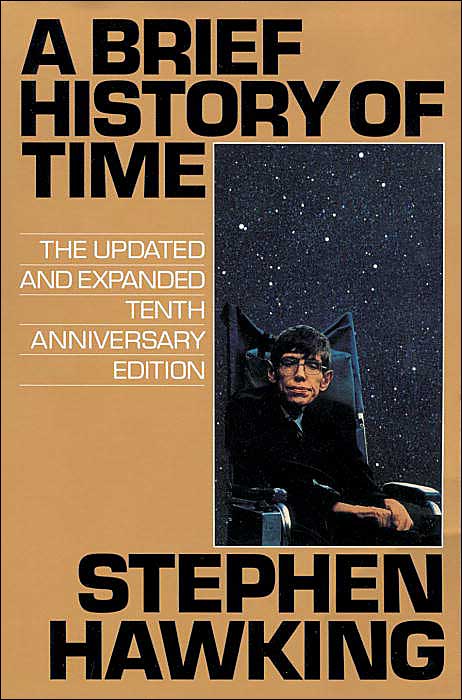
Science and God: considering Stephen Hawking

The following is from a recent Books & Culture article on the famous physicist, Stephen Hawking. The article as a whole seeks to introduce people to the man while commenting on his understanding of God and religion. I recommend the article, particularly if you want a brief overview of his bestseller, A Brief History of Time. At the end of the article, though, author Karl Giberson comments on Hawking’s “theology.”

The main critiques are that Hawking has no understanding of Christian theology, and that if he did, he wouldn’t confuse science and theology the way that he does. The Christian doctrine of creation is not in competition with the scientific explanation for the origin of the cosmos. The fact that Hawking gets this wrong only reinforces the mistaken views of the creationists. The difference is that Hawking is simply naive, while the creationists are intentional about equating science and theology. All of this just makes it harder for intelligent Christians to articulate the truth of the doctrine of creation. Here is what Giberson writes:

[Stephen] Hawking's theological naïveté is almost funny. He appears not to know that the heart of the Judeo-Christian doctrine of creation is that the world derives its being from God, not that God "started" the world, like some kid building a model airplane. Everyone from Augustine and Aquinas to Barth and Pannenberg has addressed this important distinction. The suggestion that a physical theory ruling out a well-defined "beginning" to the universe removes God from creation is the sort of simplistic misunderstanding that might be tolerated in philosophy students' first term papers, but certainly not their second.

And what of Hawking's claim that knowledge of the profoundly misnamed "Theory of Everything" would be like entering into the mind of God? Really? Is this what God thinks about? What God is this? Is there actually a church somewhere that puts equations on a big screen and invites worshippers to view them as a prelude to worship? Is this the same God whose existence Hawking disproved a few pages earlier?

All this would indeed be humorous if it were not in a book that has sold ten million copies. Hawking has done a great disservice to those purchasers of his book who have actually read it. He has misled them about the religious implications of science and the apparent motivations of scientists; he has made bogus claims about theology; he has juxtaposed science and theology as if they compete to explain the same things. Hawking's enthusiasm about doing away with God does not reflect the views of the scientific community, where there is widespread belief in God, and widespread disinterest in using science against religion.

Hawking is a major public intellectual, a leading scientist with a flair for popular exposition and a platform from which to explain science to an educated populace. He and his scientific allies—Richard Dawkins, Edward O. Wilson, Peter Atkins, the late Stephen Jay Gould, Steven Weinberg, Stephen Pinker and so on—shape public perceptions of science through their popular presentations, in books, articles, and public appearances. Their collective message—drilled home in many different ways—is that science is hostile to religion, scientists don't believe in God, and science competes with religion to explain natural phenomena.

None of these statements is true.

[Books & Culture]

Rabu, 03 Oktober 2007

Enlightenment & Capitalism

In a recent Books & Culture, there is an article on Benjamin Franklin’s interest in business, which was an aspect of his life that he kept from the public since business was considered unbecoming of a person of any importance. The article ends by highlighting how Franklin’s capitalistic sensibility is a mark of the Enlightenment.

Commercial capitalism has been so routinely disparaged for so long by American intellectuals that we have some difficulty crediting how very happily the Enlightenment embraced commercial capitalism as Nature's own system of merit over against unearned aristocratic title. Gary Nash's recent attempt to re-cast the American Revolution as a proletarian uprising, more concerned with "elementary political rights and social justice, rather than the protection of property and constitutional liberties," misses utterly how genuinely revolutionary the protection of property and constitutional liberty was in a world of absolute autocrats and talentless courtiers. Precisely because the self-made man of commerce appeared to the philosophes as a manifestation of the operation of reason and nature, Voltaire sang an unashamed song of admiration for the calculating, dispassionate self-promotion of the bourgeoisie:

I don't know which is the more useful to the state, a well-powdered lord who knows precisely what time the king gets up in the morning and what time he goes to bed, and who gives himself airs of grandeur while playing the role of slave in a minister's antechamber, or a great merchant who enriches his country, sends orders from his office to Surat and to Cairo, and contributes to the well-being of the world.

No one in revolutionary America lived up to this reputation more than Franklin. It represents a fatal inversion of Franklin's own expectations that no reputation today has lesser standing among the Revolution's scholars than that of the "great merchant." And none plays a smaller role in the modern-day marketing of Benjamin Franklin.

—Allen C. Guelzo, “Capitalist Tool” in Books and Culture

Sabtu, 22 September 2007

Rabu, 19 September 2007

God’s Harvard?

In his column for Books and Culture, John Wilson mentions the publication of the new book by Hanna Rosin on Patrick Henry College, God’s Harvard: A Christian College on a Mission to Save America. Wilson aptly calls this a “tragicomedy,” and he goes on to criticize the overblown statements in the book that Patrick Henry College is the “nerve center of the evangelical movement.” In response to this, Wilson writes, “This is a bit like homing in on a single madrassah and making ludicrously exaggerated claims for its centrality to the global Islamist movement.” Brilliant.

Patrick Henry College is a strange place, to say the least! (1) The school presents itself as an institution that has “a deliberate outreach to home schooled students.” In one of their core documents, they write, “PHC arose out of the Christian home schooling movement and will seek to continue to be the most home schooling-friendly college in the nation.” In practice, this means that the college will simply confirm what these students already believe and have been taught at home. PHC is a college for students whose parents are afraid of the world and want their children to be “protected” from views that are not acceptable. All of this begs the question: Is Christianity so fragile and difficult to support that any exposure to different views threatens to shatter the entire edifice? If so, it would be better off leaving Christianity behind altogether. (2) The school’s statement of “biblical worldview” makes creationism an article of faith: “God created man in a distinct and supernatural creative act, forming the specific man Adam from non-living material, and the specific woman Eve from Adam. The first man and woman were therefore the progenitors of all people, and humans do not share a common physical ancestry with earlier life forms.” (3) In the same statement of faith, the college discusses civil government as a divinely ordained institution; in this section, they place the Bible alongside the early American documents: “In keeping with scriptural principles and the American Declaration of Independence ...” This allows them to justify American political actions by appealing to the original documents of the United States where they cannot find justification from Scripture. And so they posit reason and natural law as an equal authority to Scripture in order to circumvent the sociopolitical challenges that God places upon us in the Bible: “While there are various types, scopes, and levels of government, there are some basic principles that God requires all general governments to follow. Moreover, there are other principles that, while not commanded, ought to be followed. All of these principles are derived from the tenor of the whole of scripture and from God-given reason, which makes plain the fact that human beings ... should govern themselves in equal submission to the laws of nature and nature's God” (italics mine). (4) Similarly, in the mission statement for their Department of Government, they place biblical interpretation alongside the interpretation of the Constitution. Moreover, they view both documents—Scripture and Constitution—in the same way, promoting originalism (“the original intent of the founding documents of the American republic”) alongside literalistic inerrancy. (5) According to their list of nonnegotiable principles, the college states: “We also support the parents' role in courtship.”

Wilson says that, unlike Steve Coll, he never found anything in this book “unnerving.” I gather that, by this, he means PHC is not a big enough deal to cause any real anxiety. The school isn’t the “nerve center of evangelicalism,” even if it wants to be. I disagree with Wilson here, because even though the school is certainly not the center of American evangelicalism, it still represents what I think is a growing contingent of evangelical fundamentalists (or fundalits, as L’Engle calls them). I, for one, am definitely unnerved by this school’s presence.

Interestingly enough, I grew up in the particular segment of society that sends children to PHC. Wilson writes: “To many of these students and their parents, evangelical institutions such as Wheaton College, Calvin College, Fuller Theological Seminary, and Christianity Today magazine would seem to have lost their way, caught up in accommodation to secular cultural norms.” To a certain extent, this includes my own family. Certain members of my extended family denounced Wheaton after it allowed students to dance. In the movie, Minority Report, one of the main characters mentions Fuller Seminary. A family member of mine asked, “Isn’t that a liberal school?” I was also home schooled for a few years, and my family mingled in home schooling circles for much of my childhood.

The end of Wilson’s column is intriguing and suggestive:
Rosin shows how difficult it is for Patrick Henry's students to pursue a strong commitment to conservative activism—requiring them to penetrate the citadels of the mainstream culture—without compromising their own understanding of Christian discipleship and what it entails. Indeed, she shows how even within the narrow, self-defined boundaries of the Patrick Henry community, tensions over how best to be true to the college's mission and the demands of the faith led to a devastating schism. It's a story many lifelong evangelicals will find all too familiar.
I suppose I will have to read the book to find out what the schism was all about. But I can guess. On the basis of my own experience, there is a difficult tension between conservative politics and following Christ’s call. The two do not mesh nearly as well as I was taught to believe growing up. Jesus is radically nonviolent. Jesus is radically against individual possessions and property. Jesus challenged the religious and political structures of his time. And the call to discipleship involves being on the margins of society rather than at the center of influence and power. The PHC mission of training cultural warriors to bring America back to its roots (assuming the myth of an original American Eden is true) requires that these graduates pursue the center over the margin—power over service, influence over discipleship, the way of America over the way of the cross. PHC is thus torn between training Christians and training Americans.

This is the fundamental decision of our time. Will we identify ourselves primarily as Christians or as Americans (or insert your nation of origin)? Will we try to combine the two in some creative fashion that ends up compromising the gospel? How will we raise our children? How will we preach the gospel? Will it be wed to a particular national politic? These are important questions that we need to ask ourselves. If it takes a schism to reclaim the gospel, then the pain will be worth it. But if we can avoid division and pursue unity, let us do so diligently.

In conclusion, is Patrick Henry College really “God’s Harvard”? It depends on what we mean. If we mean that PHC is a central part of contemporary culture and academic learning, then no. But if we mean that PHC is as confused and distorted in their views as many are at Harvard, then yes.

Update: See Hanna Rosin’s responses to questions about PHC at the Washington Post. And also check out the debate between David Kuo and Hanna Rosin at Slate.com.

Senin, 10 September 2007

Roger Lundin: re-enchanting the world

In Books & Culture, there is a review of the recent book by my professor at Wheaton College, Roger Lundin, entitled From Nature to Experience: The American Search for Cultural Authority. I cannot emphasize enough how influential Dr. Lundin was for my own intellectual growth. He was the one who first introduced me to Karl Barth, Dietrich Bonhoeffer, M. M. Bakhtin, Czeslaw Milosz, George Steiner, and Charles Taylor. I have not yet read his new book, but I eagerly look forward to it. In the meantime, I commend this review. Here is a selection of it:
[T]here are several remarkable aspects of Lundin's argument that are worth noting here. First is Lundin's daring attempt to bring certain Christian thinkers into close conversation with the looming cultural and literary theorists of our era. It is not often that one reads criticism of this sophistication pairing Rorty and Fish with Karl Barth and Dietrich Bonhoeffer. Lundin's mastery of literary theory is on full display here, and he writes a lucid prose that makes this mastery accessible. Along the way, he highlights the accomplishments of theorists and critics whom he believes share his desire to bring theology and the Christian tradition into closer dialogue with the reigning priests of the "hermeneutic of suspicion": in particular, Hans-Georg Gadamer, Charles Taylor, Mikhail Bakhtin, and Paul Ricoeur all receive ample consideration. In addition, the study considers major American writers (besides Emerson) in the light of the cultural shift charted in the book, particularly Emily Dickinson, Henry Adams, Robert Frost, William Faulkner, and that honorary American W. H. Auden. It is thus a model for those of us who are looking to engage current literary theory with the resources of the Christian tradition.

But From Nature to Experience is out for much bigger game than merely outlining a view of intellectual history. It is an attempt to recover lost wisdom and reassert lost knowledge. A crucial moment occurs at the end of the first long section, in Chapter 4, entitled "'Diminished Things': Literature and the Disenchantment of the World." Arguing that we can "re-enchant" the world, Lundin enlists the aid here of Ricoeur, whose emphasis on teleology, eschatology, and destiny are the antidotes for an unbalanced hermeneutic of suspicion. Ricoeur, along with Gadamer and Bakhtin, "acknowledge[s] the spiritual and epistemological limits of naturalism," and in echoing these theorists, Lundin reveals the burden of his overall argument: "literature and theory must recuperate certain resources that naturalism has suppressed or forgotten." Or, as Alister McGrath argues even more bluntly in his book The Reenchantment of Nature, we must "reclaim the idea of nature as God's creation and act accordingly." Lundin is taking an approach similar to McGrath's into the field of literary theory, desiring to "re-enchant" literature, and thus turning current theory on its head.

... The book ends powerfully with Karl Barth's meditations on the "real mystery of Easter," which Lundin pits against Dante's version of Limbo as a place of hopeless sighing and never-ending discussion (rather like some of the departmental meetings I've attended lately). Lundin cites Dorothy Sayers' remarks about the citizens of Limbo: "Their failure lay in not imagining better … . [They fall] short in the imagination of ecstasy."

—Harold K. Bush, “Re-Enchanting Emerson” in Books and Culture

Selasa, 14 Agustus 2007

Following the path of St. Patrick

In the latest contribution to Books & Culture’s “Christian Vision Project,” entitled “The Patrick Paradox,” Dana L. Robert writes about the example of St. Patrick, the patron saint of Ireland and a paragon of Christian mission. Her essay begins by noting that Patrick was born a Brit, but that his calling to Ireland led him to identify himself with the Irish, thus taking up their cause as his own. But his identity as a witness to the gospel of Jesus Christ led him to an even more radical position grounded in Gal. 3:28: “There is no longer Jew or Greek, there is no longer slave or free, there is no longer male and female; for all of you are one in Christ Jesus.” Patrick recognized that the gospel relatives ethnic and cultural differences by subordinating them to Jesus Christ who unifies disparate peoples into the one people of God. Robert writes:
To be a Christian was to identify with a new "reference group"—the Christian family. Fellow baptized believers from whatever tribe or nation became one's new family and should be treated as such. Racial and ethnic differences melted away in light of the common relationship in Christ. Patrick's Letter to Coroticus demonstrated that the Christian ideals of brotherly love and identification in Christ could overcome tribalism. Not only did the missionary Patrick become Irish in solidarity with their suffering, but he was brother to all baptized Christians. The demands of Christian mission included denouncing sin and injustice at grave risk to himself. In its ideal form, incorporation into the "body of Christ" meant choosing a way of peace and reconciliation that overcame ethnic boundaries, and renouncing the killing, violence, and slavery of a warrior culture.
We can and should learn much from St. Patrick. He exemplifies a way beyond the ethnocentrism and nationalism that continues to plague Christianity all around the world. Patrick does not eschew ethnic identity altogether, but he properly subordinates it to his identity as a follower of Christ. Robert thus writes at the close of her essay: “Because Patrick risked becoming Irish, the Irish became Christians. Those who seek to witness to God's mission in our time must also cast aside their own ethnic prejudices, cultural particularities, political loyalties, and memories of past injustices, in radical identification with the ‘other.’” May we, too, cast aside our cultural, political, and national loyalties in order to identify radically and selflessly with others.

Senin, 13 Agustus 2007

A thought on hidden agendas

My recent debate with John Wilson of Books & Culture—which was a positive experience, and I hope the conversation continues—has made me think about the way groups suspicious of each other seek to find “hidden agendas” in each other’s ideas or actions. Wilson finds the claims of Charles Marsh (“partisan captivity of the gospel”) and Chris Hedges (“Christo-fascists”), among others, simply untrue in relation to the world in which we actually live. In his latest column, he criticizes their positions by engaging in a bit of sarcasm:
On to other things. We have to maintain our cover, you know—talking about all kinds of books and ideas as if we cared, when what really matters to us is the agenda of the Religious Right, the "Christo-fascists," as Chris Hedges says. But wait a minute. What is the agenda for today? Maybe Hedges or some equally acute observer can let me know what it is I'm actually doing when I think I am doing something else.
Wilson ridicules the opposing viewpoint as a witch-hunt, a fruitless quest to find some “hidden agenda” in the minds of conservative evangelicals. Rather than debate this point, it seems to me more interesting to switch perspectives. If Wilson gets so upset about liberals searching for hidden agendas among evangelicals, should we not get just as much upset over evangelicals searching for hidden agendas among liberals? How many times have we heard of the “homosexual agenda”—that insidious plot to corrupt the minds of our children, pervert the sanctity of marriage, and destroy the American family? How many times have we heard myths about the ACLU plotting the downfall of Christianity? How many times have we heard of the hidden agendas of mainstream media—which are clearly pawns of the ACLU, PETA, and other liberal machines seeking the eradication of “Christian America”?

I am not accusing Wilson of holding any of these positions. All I mean to do is point out the one-sidedness that plagues these debates. Conservative evangelicals criticize their liberal opponents for fabricating hidden evangelical agendas without recognizing the way they continue to fabricate hidden liberal agendas (and vice versa). If we are going to get anywhere in these political debates, we need to assume first and foremost that the “other side” has no hidden agenda. We need to assume that each side seeks the best possible life for others. We need to begin with the assumption that each side means well and has the best of intentions. Without this basic starting-point, we will inevitably end up in dead-end arguments.

Rabu, 25 Juli 2007

Paying Attention to America: A Second Response to John Wilson

John Wilson of Books & Culture has written a third column touching on the issue of the “partisan captivity of the gospel” in response to the book by Charles Marsh. (I would, of course, like to hear him respond to my previous comments, but I’m not holding my breath.) In this latest column, Wilson quotes 2 Tim. 2:14 and challenges his interlocutors to “avoid stupid arguments.” In other words, one should make a solid case and present valid evidence, rather than simply repeat catchy axioms or speak from personal experience. What’s interesting about Wilson’s statement is that this is precisely the criticism I put forward against him in response to his first column about Marsh’s book. Certainly, if he thinks I am putting forward “stupid arguments,” I would like to know so that I can respond intelligently. Unless he makes his criticism clear to me, I will assume he refers to people other than myself.

Wilson then writes:
What are we in fact talking about? From my point of view—open to correction—that seems to have become rather blurred as the conversation has proceeded. Charles Marsh contends that the "partisan captivity of the gospel in the United States is the gravest theological crisis of the Christian faith in our time." That's a sweeping judgment, accompanied by similarly sweeping pronouncements in the course of Marsh's book. Is this central contention true? How should such a claim be assessed? What sort of evidence counts? (For instance, would it be relevant to look back at the cover stories from the last 12 issues of Christianity Today magazine? Would that be one small chunk of useful evidence?)
A charitable reading of this statement would be that Wilson wants to keep our conversation grounded in Marsh’s particular claims about the “captivity of the gospel.” (Of course, the conversation was never about Marsh’s own arguments; it was about Wilson’s rejection of Marsh’s arguments.) An uncharitable reading would be that Wilson is avoiding all the counter-arguments with which he disagrees by either calling them “stupid” or asserting that they are “blurring” the conversation (i.e., they are irrelevant). While it seems probable that the uncharitable reading is more accurate, I will give Wilson the benefit of the doubt and assume the charitable interpretation.

We are thus back at square one. After three columns, I had expected to get further along than this. Unfortunately, I am stuck answering the same questions raised the first time: Is there really a “partisan captivity of the gospel” in America? Is the problem as wide-spread as Marsh suggests? The only advance that I can see is that Wilson is no longer using his own personal experience as the trump card. He at least recognizes that the different sides in the debate need to put forward evidence and sound arguments. As Wilson notes, the obvious question arises: What counts as a solid argument or convincing evidence? Wilson suggests looking at the covers of Christianity Today. That’s certainly an interesting suggestion. But why not look at the covers of World or Focus on the Family. Somehow I get the feeling these might offer a more accurate (or at least complete) picture of contemporary evangelical politics.

My own evidence is quite simple: the widespread support for war (and the Iraq war in particular) and the death penalty among pro-life evangelicals. Why are so many evangelicals pro-life on some issues but not pro-life on others? What could possibly explain this obvious hypocrisy? I suggest that Marsh offers the correct diagnosis: there is a partisan captivity of the gospel among American evangelicals. In my recent critique of nationalism in American evangelicalism, I said that the problem with evangelicalism today is not a disregard for politics but rather a political engagement strictly along party lines. Evangelicals rightly think that the Christian faith has important ethical implications and thus calls people to social and political action. But many evangelicals have blindly superimposed the American two-party system onto Scripture, or, conversely, tried to squeeze the gospel into a Republican mold. Either way, far too many evangelicals arbitrarily abide by certain passages from Scripture while rejecting others—once again, along party lines.

To be clear, I think evangelicals who side with the Democratic party as the best articulation of the gospel are also in the wrong. The gospel does not conform to any political party—much less an American political party. I am thus skeptical of Jim Wallis and Randall Balmer, just as I am skeptical of any Christian who calls a particular party “my party.” I realize some will say that picking a party is like going to war: it is a necessary evil in our present situation. But I reject this line of argumentation (about both picking parties and going to war). The Christian life is a life of discipleship, in which we are called to bear our cross, to lay down our lives for our neighbors, and to love our enemies. We are not called to devise political schemes for the success of a particular ideology. The fight against abortion, for example, is not so important that we must be willing to wed the gospel with a particular party. In other words, to put it in starker terms, the fight against abortion is not so important that we must be willing to commit idolatry. If discipleship means anything, it means standing up for what is right (contra war, environmental destruction, economic and educational inequity, etc.), even if it means giving up political influence and the attention of a powerful president.

I generally side with people like Tony Campolo who advocate for a “seamless garment” pro-life position. American evangelicals, for the most part, advocate for life on only a few select issues—issues that are determined along party lines. As a result, the evangelical pro-life movement is all too often arbitrary and hypocritical, despite the recent commendable support of environmentalism as a pro-life issue. Do evangelicals go off to war on the basis of their Christian faith—a faith rooted in Scripture and a theologically robust understanding of the gospel? Or do they go off to war on the basis of a loyalty to their country? Are evangelicals Americans or Christians first? And does this change depending on whether they are in church on Sunday morning or at work or in school or celebrating the Fourth of July or listening to the president speak or at a Marine recruitment office or in Iraq? Is our identity shaped by Jesus Christ, our Lord and King (or President, to use modern lingo) or by the American president? Is our political perspective shaped by the gospel or by the two-party system?

As long as evangelicals continue to be selectively and arbitrarily pro-life, Marsh is quite correct to say that there is a “partisan captivity of the gospel.” Of course, Wilson is also quite correct to point that (as he did in a personal email) that the world of American evangelicalism is much more complex than one might conclude from reading Marsh’s book. But this is an empty argument, because it can be used against anyone. Are not all books oversimplifications of reality? Is there any book that actually captures the full complexity of human existence, much less American evangelical existence? I tend to think the argument used by Wilson has a dark side to it. Often people who denounce a book for oversimplifying matters are simply upset that the author has created a picture which one does not like or with which one does not agree. Would Wilson feel the same about a book which targeted the “liberal captivity of the gospel” in America? Don’t Hannity and Limbaugh and O’Reilly—not to mention Dobson, Robertson, and the late Falwell—oversimplify matters just as much if not much more so than Balmer and Marsh? The “oversimplification” argument is often useful, but it can also be quite sinister. It can disguise one’s own ideology while exposing another’s. And as I said in my previous post on this topic, I am firmly convinced that evangelical partisanship is the symptom and not the actual disease. I would very much like to hear Wilson’s response to that point.

At the end of his last column, Wilson asks: “To answer the questions raised by Marsh's book, we have to pay attention to the America we actually inhabit.” I wholeheartedly agree. And I think this is precisely what I have been doing. I am open to hearing how I can better pay attention to America. Even though I have been critical of Wilson in this post, I remain dedicated to carrying on the conversation. In his second column, Wilson asked: “Can we talk?” I believe that we can. But I have to hear any constructive feedback from those who take Wilson’s side. Perhaps the partisanship is not as pervasive as some might suggest. But surely that is no argument against the existence—even wide-spread existence—of such evangelical partisanship, or of its underlying causes. In the end, I agree with Wilson: no more stupid arguments.

Selasa, 24 Juli 2007

The Gospel according to the Arcade Fire

I would like to someday write a book with this title. Ever since I first heard the Arcade Fire in 2004, I knew that they deserved a careful and intelligent engagement. After two albums and two live shows, my love for this band has never wavered but has only expanded and matured. And while I do not have the time or energy at this point in my life to write such a book, it gives me great pleasure to say that the new article by David Dark in Books & Culture will suffice nicely (at least for now). Dark’s analysis of the Arcade Fire is penetrating and thoughtful. My only misgiving is that I did not write it myself.

Selasa, 17 Juli 2007

New tag: “Books and Culture”

In case you have not noticed, a lot of my blogging is done in response to articles and columns published in Books & Culture, the culturally sophisticated supplement to Christianity Today. I decided today that I have enough posts on B&C to warrant a new tag titled “Books and Culture” (the ampersand, unfortunately, is not allowed). There you can find all the posts that deal with articles published in this important journal.

A shout-out to Alan Jacobs: If you are not a regular reader of Books & Culture, be sure at the very least to read the monthly column by Alan Jacobs, “Rumors of Glory.” His column addresses contemporary issues in art, religion, and politics. His latest column, “Amplifying Charity,” is particularly worth reading if you are a blogger.

Gospel and Politics: A Response to John Wilson

Yesterday, John Wilson posted a response to my blog post of last week which was itself a (rather hastily written) response to his review of the new book by Charles Marsh on the partisanship of contemporary American Christianity. I have to admit: I am flattered that of all the responses John Wilson (editor of the consistently excellent Books & Culture) received, he chose to respond to mine in his latest column. Wilson calls Fire & Rose a “thoughtful blog,” and from such a well-read and intelligent person, this is high praise indeed. I am grateful to Wilson for taking the time to read these random musings of mine.

On a side note, while I have not yet read Marsh’s book, I suspect I will agree with its basic thesis. (I agree with Wilson that cries of theocracy are getting a bit old, but I disagree with Wilson in that I think these cries are often on-target.)

I wish to thank Wilson for his thoughtful response. As a 2004 Wheaton College graduate with a major in English literature, I have heard him speak on numerous occasions, often introducing or asking questions of visiting writers. My short response to him is that I certainly hope the conversation continues, and I think there is much about which we agree. I also think my brief statements lack clarity and were too ambiguous to be accurately understood. Let me offer some clarifications of my earlier post:

1. Wilson makes more of my statement that his review was “unnecessarily harsh” than I intended. But seriously, was his review of the new books by Chris Hedges and Dinesh D’Souza an example of political charity? Wilson did not seem interested in starting a conversation with either of them. Do we have Alan Jacobs’ excellent column to thank for his softer side? (I’ll admit to being just as harsh and uncharitable as Wilson often is. Certainly, my words can come back to bite me. I’m learning along with the rest of them.)

2. My mention of idolatry seems rather out of place without my recent criticism of nationalism kept in mind. I did not mean to suggest that people from my hometown are simply idolaters who do not take the gospel seriously. That would be going way too far. I meant to suggest rather that the underlining issue is not merely a partisan captivity of the gospel. Instead, one’s partisanship has its origin in a more fundamental issue—viz. how we understand the gospel. Marsh is only half-right in criticizing the partisanship of American Christianity, and Wilson is only half-wrong when he says that partisan politics is not the main feature of evangelicalism. To both I would say that partisanship is the symptom, not the disease. As a result, it rears its ugly head in some places but not others. A disease can rage undetected for years. I think Wilson happens to experience an evangelicalism where the symptoms are not as obvious, whereas I grew up in an environment where the symptoms were sometimes all I knew of Christianity. The disease, I want to suggest, is rooted in a misunderstanding of the gospel, one that depoliticizes Christ’s call to discipleship and/or attaches it to some earthly phenomenon, forgetting that the kingdom of God is “not of this world” but rather of the new world, the New Jerusalem, which is still sociopolitical in nature. In sum, I am not calling partisan politics itself idolatry, but rather suggesting that partisanship flows out of a distorted (perhaps idolatrous) conception of the gospel.

3. I do not want to suggest in the least that voting based on moral issues is somehow invalid. I am against abortion as much as the next person. Two things bother me greatly, though: (1) the notion that abortion trumps every other moral issue, and (2) that voting for a particular party trumps even the issue of abortion. Both of these were apparent in the NY Times article to which I referred in my previous post. Both of them are guided by a deeply partisan politics that reveals a profound captivity of American evangelicalism. I happen to think war is a more damaging reality than abortion, but I realize many will disagree with me. While I do not want to suggest that voting on the basis of these moral issues is misguided, I do wish to say that to care about one issue without caring for the other(s) is a major problem that needs to be addressed. And if it takes twenty books saying the same thing to get the point across, then so be it.

4. Finally, I am not convinced that we have such moral clarity in any issue that we can let it determine our entire vote. But I do think there is a qualitative difference between abortion and war policy: the former is not tied to a particular national ideology. That is, to support or reject abortion has no intrinsic connection to whether one also supports the Bush administration or feels patriotic about America. The same is not true of the war in Iraq. Both abortion and war are moral issues, to be sure, but war is a national issue as well. Both are also pro-life issues, yet the broad support for the war by American evangelicals demonstrates an extra factor in the political equation beyond evangelical interest in preserving human life—viz. a nationalistic support for (violent) American involvement in world affairs. This concerns me, as it also (apparently) concerns Marsh. I wonder if it concerns Wilson as well. Perhaps he does not think my criticism of nationalism corresponds to the evangelical world he has experienced thus far, but two can play at that game.

In conclusion, I certainly hope the conversation continues. My first post was guilty of some exaggeration (e.g., the use of “infinitely”), but I do think the issue is as serious as I and others make it out to be. Even so, I am hopeful that the less partisan, less politically captive world experienced by Wilson is truer to the way things actually are than I presently realize. And at the very least, I hope we can work together to bring about such a world, if only in our local communities.

Jumat, 13 Juli 2007

Providence reconsidered

In the most recent issue of Books & Culture, Brad S. Gregory reviews the new book on divine providence by Steven J. Keillor titled, God’s Judgments: Interpreting History and the Christian Faith. The thesis of Keillor’s book is suspiciously ambitious: because the Scriptures describe certain events as divine judgment against sinful people, we are able on this biblical basis to discern certain historical events in the present also as God’s judgment against sin and evil. Keillor’s book is thus a sustained argument against the modern, scholarly discipline of history that discards the categories of divine judgment and divine providence from any interpretation of historical events. Modern historical scholarship forces historians to examine world events “as if they were deists or atheists, even if they believe that God acts in history.” Keillor sets out to reject through historical arguments this modern a priori repudiation of the traditional, Christian view of history in which God is the acting agent in contemporary events.

According to the reviewer, Keillor repeatedly denounces the “Christian worldview” mentality that is prevalent among Christian fundamentalists, such as Pat Robertson and the late Jerry Falwell. Keillor rejects this on the basis that it erects a quasi-philosophical system on the basis of the biblical text through which all reality can be interpreted exactly. Keillor is not quite so ambitious. But he nevertheless wishes to establish a median between philosophical exactness and modern practical atheism. Keillor seeks “to correlate known causes of the event with known categories of divine holiness and judgment” and thereby to identify certain events as caused by God as judgment against sinful people. Gregory summarizes Keillor’s position in the following way: “if God’s purposes are such and such, then certain events are plausibly understood as his judgments in the flow of human history.” As quoted by Gregory, Keillor writes in his book:
We must beware of presumption in claiming to know the mind of God. But the pendulum has swung to the opposite extreme, where the inability to know for sure morphs into a refusal to ask questions that cannot be known with certainty and then into a dismissal of the category of divine judgment.
This is certainly an ambitious and subversive book, but I am also deeply afraid of what Keillor is trying to accomplish here. God’s Judgments may be both one of the most interesting and one of the most dangerous titles to be released in a long time. I wish to briefly identify where I think Keillor’s proposal (on the basis of the review, not having read the book myself) is likely to be most problematic. My own thesis, in short, is that Keillor’s book wades into theological territory far too complicated and messy for a biblically-literate historian to successfully navigate. And since Keillor seems to be unaware of the theological issues at stake, this makes his proposal dangerous in that it obscures and/or ignores the theological positions he takes in the book without realizing it. In what follows I highlight areas that demand more careful theological attention.

1. What do we mean by “divine judgment”?

This is a serious question that requires careful theological investigation. Based on the book’s table of contents and Gregory’s review, it seems that Keillor views judgment as divine condemnation—the figurative “lightning bolt” from heaven. Judgment is apparently something that God does in history to curb sin and punish evil. The massive problem with this thesis is that it fails to think christologically. According to the New Testament, divine judgment is radically redefined in terms of the cross, in which sin was definitively judged. As Barth says, Jesus Christ is the Judge who was judged in our place and on our behalf. If we do not consider judgment from this vantage point, we will miss the point of divine judgment: to bring life and peace to the world. Divine judgment is not simply a No; it is also and more importantly God’s sovereign Yes.

To be fair, Keillor does attempt to think christologically. The sixth chapter of the book is auspiciously entitled, “History’s Meaning: The Son of Man in His Descent, Ascent and Return.” According to Gregory, Keillor identifies the Hebrew concept of mishpat, so that divine judgment is now a christological reality. With this, I agree wholeheartedly. But Gregory then summarizes Keillor’s view in the following way: “Beginning with the incarnation, God’s winnowing purposes in history are identical with Christ’s: those who believe in him and his gospel will be saved, those who reject him will be judged. This applies to nations as well as individuals, an idea nowhere rejected in the New Testament.” If this is an accurate reading of Keillor’s thesis, then I must reject it for two important reasons: (1) I know of no NT support for the notion that God judges unbelief in history, in addition to after the end of history; (2) divine judgment in both history and eternity must be identified with the judgment borne by Christ on the cross, and thus we cannot posit forms of divine justice which do not take Christ’s sacrifice ‘for us and our salvation’ into account. Regarding the judgment of nations, see my next point.

2. Judgment against nations but not individuals?

Gregory writes the following about Keillor’s book:
In three densely exegetical and theological chapters, Keillor develops his interpretive foundation. Central is the notion, pervasive in the Old Testament prophets, that God judges not only individuals, but nations—all nations, not only ancient Israel and its neighboring kingdoms—as part of his action in history. Keillor distinguishes clearly between divine judgments of individuals and nations; his book addresses only the latter, sensibly mindful of the implications of Luke 13:1-5.
I am very skeptical of the position being taken here. While Job and Luke 13 may cast doubt upon the notion of divine judgment of individuals, what is a nation other than an aggregate of individuals? It seems that Keillor’s argument depends on the reification of the abstract concept of “nation,” thus turning nation-states into objects of divine judgment abstracted from the individuals that actually constitute the nations. How can God judge nations without judging individuals? Furthermore, the move from ancient nations to modern nations seems quite problematic. We have no biblical calculus that will allow us to extrapolate from ancient nations to modern nation-states. More on this in the next section.

Moreover, I am not entirely sure that Keillor has really examined the biblical evidence. In the episode recorded in Luke 13, Jesus denies the assumption that the Galileans killed by Pilate had sinned more than others. He says instead (twice for emphasis), “No, I tell you; but unless you repent, you will all perish as they did. ... No, I tell you; but unless you repent, you will all perish just as they did” (Lk. 13:3, 5). The point of the passage seems to be twofold: (1) God does not judge certain individuals more than others, and (2) God judges everyone equally because sin is universal. The point is not that God does not judge individuals, but that God judges all individuals. As Paul writes in Romans: “all have sinned and fall short of the glory of God,” and “the wages of sin is death” (Rom. 3:23, 6:23). Furthermore, in John 9:1-5, there is another important episode with a blind man. The disciples ask Jesus who sinned, this man or his parents, but Jesus denies that sin has anything to do with his blindness. Instead, he says that “he was born blind so that God’s works might be revealed in him.” It seems to me that if divine judgment is anything, it is God’s sovereign determination to reveal God’s glory in the world—a revelation uniquely constituted by Jesus Christ. To limit divine judgment to a crude punishment for sin is to miss the bigger picture: God judges in order to bring glory to God, and this is true of the blind man even though sin is not the basis for this judgment. As in Luke 13, the point is that no person’s sin is greater than any other’s, but what John 9 shows is that God still works in the lives of individuals.

Keillor’s problem is that he views judgment purely in the punitive sense, and therefore to avoid the problems associated with individual sin, he turns to abstraction and applies judgment to nations. But we need to remember that divine judgment affects people on an individual basis, and the definitive judgment executed in Christ is not judgment in the abstract but rather personal, concrete, and effective for each person.

3. Does the Bible provide principles for divine action?

While Keillor realizes that we cannot circumvent Christ in our understanding of divine judgment, his proposal requires that he go beyond the biblical testimony in order to speak about God’s activity in the present. The Bible’s witness to what God has done is not enough; the Bible must also be able to inform what God is doing. In order to accomplish this, Keillor seeks to derive from the biblical testimony certain basic principles for how God acts in the present. The problem is that we cannot deduce principles for divine action. God cannot be reduced to certain patterns without replacing a personal deity with abstract concepts. Granted, Keillor tries to avoid creating a philosophical system or “worldview” from the Bible, but I am not convinced on the basis of the review that he is free from criticism on this point.

Keillor’s continual problem seems to be a turn to abstraction in order to solve theological problems. In this case, he avoids the concreteness and historical situatedness of Scripture by finding principles and patterns of divine action that he can apply to any situation. The problem is that patterns and principles are not themselves revelation; they do not give access into the mind of God. Certainly, we must affirm that God acts according to God’s self-determined character, but God’s self-determination is identified with a person, not a principle, and the person of Christ is a concrete reality who has one particular concrete story. Moreover, the ascended Christ does not accomplish a different kind of judgment here and now (or in the eschaton) than the one he bore upon himself at Golgotha. So unless Keillor wishes to understand the judgment carried out in Jesus Christ as a judgment against those who do not believe in him, I believe we are led to strongly question his account of divine judgment.

Keillor advocates what he calls the “scriptural view,” which is basically a soft version of the “biblical worldview” thinking that he disparages (and rightly so). His criticism of others is therefore just a self-indictment. While he may phrase his conclusions much more cautiously, he remains bound to the same method of moving from text to history, from biblical past to historical present. As I have tried to show here, his thesis depends upon major theological and exegetical presuppositions (e.g., punitive divine judgment of nations, emphasis upon OT narratives, Christ not as the judge judged in our place but as the one who judges unbelief), and if he is going to be confident enough to call his position the “scriptural view” then he better be able to back it up. Gregory’s main criticism is on this very point—particularly the perspicuity of Scripture that Keillor takes for granted (for him, at least)—so I will not repeat what he has already said very well.

4. An arbitrary God?

One of the biggest problems with Keillor’s account is a problem that Schleiermacher and a number of other modern theologians have had with certain conceptions of God—viz. the view of God as an aloof observer of history who only occasionally acts to intervene when things are not going right. While this is the view that seems to be held by most of the writers of the biblical text, it is nevertheless a view that needs to be greatly qualified if not discarded in order to make sense of the Christian faith. Two of the biggest problems include (1) an arbitrary God who acts for some but not for others, and (2) a God who is not in control of all creation but must instead intervene. Keillor, I think, is liable to these criticisms, among others. God in his account observes history but is not continually involved in creaturely reality. There is no doctrine of concursus dei, as far as I can tell, and this is a major oversight. God is simply a transcendent deity who, like the cosmic watchmaker, simply creates the universe and then lets it go undisturbed until a nation commits enough atrocities to deserve God’s wrath in the form of other historical events.

Keillor seeks to avoid the notion of God working through absolutely supernatural events, but his God is still just as arbitrary and aloof, even though God works through historical events. Why is God to be found in certain events but not others? Why is God involved in the attacks of 9/11 but not in the “terroristic guerrilla units against the Soviets” which Keillor says is a possible reason for 9/11? If God was involved in 9/11, is God also involved in the Iraq War? Certainly, God is not to be identified with evil, but there is no historical event that is wholly good or wholly evil. Even if we grant that some events are more in conformity with God’s character than other events, we are theologically misguided to assume that God is not involved in each and every event as the God who accompanies all human action in order to bring creaturely reality into conformity with the covenant of grace.

Along these lines, Gregory’s comments are right on target:
In addition, difficulties seem to arise when one endeavors to understand God’s judgments in a broader context of large-scale human suffering and sinfulness. According to Keillor, Scripture testifies that God judges sinful nations in the course of historical processes, which in American history can be discerned in major, tragic events such as the Civil War and 9/11. But it does not seem to follow (a) that all large-scale, calamitous sufferings of a nation or people can be convincingly interpreted as God’s judgment, or (b) that egregious, widespread sinfulness in a nation predictably provokes God’s judgment in any obvious way, or (c) that the absence of major, tragic events at any given time implies God’s favor toward a nation rather than his wrath.

As examples of each, consider (a) the suffering endured for decades by citizens of African nations brutalized by postcolonial dictators, despite the simultaneous, rapid growth of African Christianity; (b) the treatment of southern blacks by whites in the United States, which remained atrocious for a century after the abolition of slavery, despite the lack of any cataclysm seemingly condign to the sinfulness; and (c) idolatrous American consumerism and immorality, which were no less rampant in the late 1990s than they were on September 11, 2001, yet the lack of any calamity in the 1990s cannot have implied (if Keillor’s interpretation is correct) that up until that day God was smiling on the United States.
5. Number idolatry

Following the previous quote, why must judgment be found only in “major, tragic events”? Keillor’s book assumes that God can only be identified with national/global events that involve many, many lives. I call this “number idolatry” and it is an idolatry that plagues our world today. This problem also goes back to the issue of God judging nations but not individuals. Why is God involved only when thousands of lives are at stake, but not when just one life is on the line? We see number idolatry whenever we have a major natural disaster. People around the world ask where God was in the tsunami, but they do not ask where God was when the teenager in Philadelphia was shot by the local gang or when the Californian family lost their father in a car accident. Why do ten thousand lives implicate God, but not one life?

6. Conclusion

Why do we need this book? If Keillor realizes the dangers of a system that informs us exactly where God is involved, then why are his cautious identifications of historical events with divine judgment at all helpful? What are we supposed to gain from the association of certain major events with God’s wrath? If we are supposed to gain a more potent awareness of our own guilt, then it seems that this can and should be gained without recourse to God. Are we incapable of seeing our own sinfulness unless we identify some tragic event as God’s judgment of our prior actions? Is this book simply an attempt to demonstrate how current events are similar to biblical events, as if to say, “Look, we are not any different than they”?

In the end, I fail to see what this book accomplishes except to mislead people on major doctrinal, theological, and exegetical issues. Keillor’s book is brazen and bold, but in the final analysis, only a “major, tragic event.”