 Umberto Eco is well-known as both a scholar of semiotics and a novelist, and his most famous novel is The Name of the Rose. In this historical novel, Eco crafts an intricate murder mystery which takes place in an Italian abbey in the fourteenth century. At the heart of the mystery is a labyrinthine library, and at the heart of the library is (as always) a text. The central characters of the story are Brother William of Baskerville, who learned the art of solving mysteries from his mentor, Roger Bacon, and Adso, a “young Benedictine novice” who accompanies William as his “scribe and disciple.” Many of the key events take place in the middle of the night, when William and Adso sneak into the library (from which they, along with all monks besides the librarian, are officially forbidden) in order to probe its many secrets.
In one of these excursions, the following dialogue takes place between the two of them. The context is this: William and Adso come across some books by Muslim scholars, including a beautiful copy of the Koran (“the Bible of the infidels,” Adso says). Looking further, Adso discovers books about animals, science, and even one on unicorns. This is the point at which the dialogue that I have transcribed begins. I encourage you to read the dialogue; it is one of the most remarkable scenes in the book. I offer some thoughts about this passage below.
______________________________
From Umberto Eco’s The Name of the Rose:
[William speaking] “You see, among monsters and falsehoods they have also placed works of science from which Christians have much to learn. That was the way they thought in the times when the library was built. . . .”
[Adso] “But why have they also put a book with the unicorn among the falsehoods?” I asked.
“Obviously the founders of the library had strange ideas. They must have believed that this book which speaks of fantastic animals and beasts living in distant lands was part of the catalogue of falsehoods spread by the infidels. . . .”
“But is the unicorn a falsehood? It’s the sweetest of animals and a noble symbol. It stands for Christ, and for chastity; it can be captured only by setting a virgin in the forest . . .”
“So it is said, Adso. But many tend to believe that it’s a fable, an invention of the pagans.”
“What a disappointment,” I said. “I would have liked to encounter one, crossing a wood. Otherwise what’s the pleasure of crossing a wood?”
“It’s not certain the animal doesn’t exist. Perhaps it’s different from the way it’s illustrated in these books. A Venetian traveler went to very distant lands, quite close to the fons paradisi of which maps tell, and he saw unicorns. But he found them rough and clumsy, and very ugly and black. I believe he saw a real animal with one horn on its brow. It was probably the same animal the ancient masters first described faithfully. They were never completely mistaken, and had received from God the opportunity to see things we haven’t seen. Then this description, passing from auctoritas to auctoritas, was transformed through successive imaginative exercises, and unicorns became fanciful animals, white and gentle. So if you hear there’s a unicorn in a wood, don’t go there with a virgin: the animal might resemble more closely the Venetian’s account than the description in this book.”
“But did the ancient masters happen to receive from God the revelation of the unicorn’s true nature?”
“Not the revelation: the experience. They were fortunate enough to be born in lands where unicorns live, or in times when unicorns lived in our own lands.”
“But then how can we trust ancient wisdom, whose traces you are always seeking, if it is handed down by lying books that have interpreted it with such license?”
“Books are not made to be believed, but to be subjected to inquiry. When we consider a book, we mustn’t ask ourselves what it says but what it means, a precept that the commentators of the holy books had very clearly in mind. The unicorn, as these books speak of him, embodies a moral truth, or allegorical, or analogical, but one that remains true, as the idea that chastity is a noble virtue remains true. But as for the literal truth that sustains the other three truths, we have yet to see what original experience gave birth to the letter. The literal object must be discussed, even if its higher meaning remains good. In a book it is written that diamond can be cut only with a billy goat’s blood. My great master Roger Bacon said it was not true, simply because he had tried and had failed. But if the relation between a diamond and goat’s blood had had a nobler meaning, that would have remained intact.”
“Then higher truths can be expressed while the letter is lying,” I said. “Still, it grieves me to think this unicorn doesn’t exist, or never existed, or cannot exist one day.”
 “It is not licit to impose confines on divine omnipotence, and if God so willed, unicorns could also exist. But console yourself, they exist in these books, which, if they do not speak of real existence, speak of possible existence.”
“So must we then read books without faith, which is a theological virtue?”
“There are two other theological virtues as well. The hope that the possible is. And charity, toward those who believed in good faith that the possible was.”
“But what use is the unicorn to you if your intellect doesn’t believe in it?”
“. . . The unicorn of the books is like a print. If the print exists, there must have existed something whose print it is.”
“But different from the print, you say.”
“Of course. The print does not always have the same shape as the body that impressed it, and it doesn’t always derive from the pressure of a body. At times it reproduces the impression a body has left in our mind: it is the print of an idea. The idea is sign of things, and the image is sign of the idea, sign of a sign. But from the image I reconstruct, if not the body, the idea that others had of it.”
“And this is enough for you?”
“No, because true learning must not be content with ideas, which are, in fact, signs, but must discover things in their individual truth. And so I would like to go back from this print of a print to the individual unicorn that stands at the beginning of the chain. . . .”
“Then I can always and only speak of something that speaks to me of something else, and so on. But the final something, the true one—does that never exist?”
“Perhaps it does: it is the individual unicorn. And don’t worry: one of these days you will encounter it, however black and ugly it may be.”
(Umberto Eco, The Name of the Rose, 315-17)
______________________________
This passage is remarkable for many reasons. For starters, it is a plausible account of how certain legends and myths come to be so widely accepted. It is also a nice summary of semiotics: “The idea is sign of things, and the image is sign of the idea, sign of a sign. But from the image I reconstruct, if not the body, the idea that others had of it.” But I find the dialogue to be interesting for another reason altogether: namely, the insights Eco offers into the field of bibliology. While I doubt he intended the dialogue to function in this way, it seems to me that William’s comments are easily adaptable into a doctrine of revelation and Holy Scripture. I will try to flesh out what I mean in brief.
One of the key insights gained from historical critical scholarship is that the biblical testimony may differ quite dramatically from what “actually” happened. That is, Scripture may differ from “history,” scientifically understood.
I put “actually” and “history” in quotation marks because it is a key theological conviction of mine—following many others before me, including Cavanaugh, Frei, Barth—that to compare Scripture with “real history” is a mistake, insofar as we invest the “real history” with the value of being “true” when in fact it is Scripture which should be definitive of what we count as “historical.” That is, the true history is the narrative of Holy Scripture. We must understand the world as the world of the Bible. We live within this narrative, the narrative of God’s sovereign and gracious encounter with humanity in Jesus Christ. We must allow ourselves to be re-scripted and re-narrated according to the theological imagination of Scripture, rather than seek to conform Scripture to an external account of history which is itself an alternative imagination ungoverned by God’s self-revelation. Be that as it may, there is still value in historical criticism, because even if we recognize the priority and centrality of Scripture as divine narrative, we cannot isolate the text of Scripture from the cultural-historical context in which it arose. In other words, we have to differentiate between the theological narrative of divine-human history shaped by Scripture and the human, historical text which functions as the bearer of this narrative. To critically analyze the text does not jeopardize the authority of its witness to God’s self-revelation; it remains a providentially elected and sanctified witness to the narrative of the covenantal fellowship between God and humanity.
One of the problems raised by historical criticism is the correspondence between text and event, between testimony and experience. Archeology, for example, has placed the account of the Israelite destruction of Jericho in great doubt, probably beyond all possibility of verification. The ten plagues in the Exodus account are similarly doubtful as an actual event, though some have offered very convoluted explanations for how these things could have actually taken place. One of the more famous episodes is the account of God stopping the sun in the sky to provide an extra day’s worth of light (Josh. 10), an episode which is clearly legendary in nature. (For a fundamentalist attempt to explain this event scientifically, see this unintentionally funny explanation.) The point of such critical examinations of Scripture is that we forced to grapple with the humanity of this text. The Bible is not dictated by God; it is rather an account written and edited by human authors, compiled over the course of many years.
Karl Barth suggested a theological way of accounting for this human, historical element: Scripture is the human witness to revelation, not the revelation itself. In his essay, “Revelation” (God in Action, pp. 3-19), Barth uses the analogy of a battle to explain the relationship between revelation and Scripture. In his military analogy, the actual attack (so to speak) is God’s coming to us in the revelation of Jesus Christ. The incarnation is God’s attack upon the prophets and apostles who were the first-hand witnesses. Barth writes, “The group whom the enemy has already attacked are the prophets and apostles; and their report to the other group which is standing behind the front line prepared to reenforce them [i.e., us] is the Holy Scripture.” In other words, Jesus Christ is the revelation; the Bible is the testimony or witness to this singular event; and we are the ones who hear and respond to the testimony from those at the front lines. The church is the community centered around this event, but at a remove: “These reenforcements whom the report from the front line has called up is the Church which hears the Holy Scripture. The moment of the call, and thus of decision, resolution, command, and obedience is the moment in which we stand: the moment of confession.” This means that Scripture does not need to be inerrant in order to be authoritative. Why? Because it is the human witness to the divine event of revelation. We can recognize the event despite and through the fallibility of the message. What the message preserves in its errant forms is the event of salvation through Christ, the coming of God to the world pro nobis.
Brother William’s dialogue with Adso presents a non-theological version of this same basic idea. Instead of Jesus Christ, the revelation is the unicorn. Instead of the prophets and apostles who are at the “front lines,” we read instead about “a Venetian traveler.” Like Scripture’s traditioning process of redactors, we read about how “this description [of the unicorn], passing from auctoritas to auctoritas, was transformed through successive imaginative exercises.” The end result is that “the animal might resemble more closely the Venetian’s account than the description in this book.” Instead of the white and gentle creature of myth, the individual unicorn might actually be “black and ugly.”
Adso then asks whether the ancients happened “to receive from God the revelation of the unicorn’s true nature.” William responds by saying that they received “not the revelation,” but the “experience.” This is very similar to what Barth argues is the case with Scripture. The prophets and apostles were not given some propositional revelation that they could then recount to others in a factually correct sense. The revelation is a personal event, viz. Jesus Christ. In Eco’s dialogue, the revelation is the unicorn itself. And thus both the apostles and the Venetian traveler are not given some revelatory content in the form of logical propositions; they are rather given an experience. The experience of God—particularly the experience of Jesus Christ—confirmed by the Holy Spirit, is then translated into the imaginative, even at times mythical, account of Holy Scripture, which functions as the witness to that experiential event. And so we read of a conquest of Canaan by the Israelites, when the historical reality was most likely very different, hints of which come through the text like fissures in the rock waiting to be cracked open. The same goes for the unicorn legends.
At this point, Adso asks the key question: “how can we trust ancient wisdom, whose traces you are always seeking, if it is handed down by lying books that have interpreted it with such license?” William responds by saying:
Books are not made to be believed, but to be subjected to inquiry. When we consider a book, we mustn’t ask ourselves what it says but what it means, a precept that the commentators of the holy books had very clearly in mind.Here Eco connects his fictional dialogue with biblical interpretation, subtly suggesting the line of inquiry which I have pursued here. Essentially, William says that we cannot confine ourselves to the letters on the page. The literal words on the page are not the object of revelation itself; they are only a sign, a witness, to that revelation. We do not place our faith in the book, but in Jesus Christ. To restate William’s key line: books are not made to be believed, but to be interpreted. At the heart of bibliology, therefore, is hermeneutics.
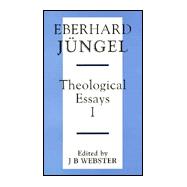 Finally, William of Baskerville suggests that these books about unicorns and other mythical creatures do not speak of “real existence” but of “possible existence.” He goes on to suggest that instead of reading with the virtue of faith, we should learn to read with the virtues of hope and love. These are profound statements full of rich possibilities. To explore them, I turn now to one of Eberhard Jüngel’s most important essays, “The World as Possibility and Actuality: The Ontology of the Doctrine of Justification” (Theological Essays I, pp. 95-123).
Jüngel’s thesis is that while Aristotle understood actuality to be ontologically superior to possibility, Christianity gives ontological priority to possibility on the basis of the doctrine of justification, i.e., resurrection, the new creation, the eschatological creatio ex nihilo. We must understand the world not only as a created actuality, “but—out of the resurrection of the dead—as creation out of nothing.” He goes on to say:
Theology must establish that the radical nothingness of Good Friday is the other dimension of the being of the world. . . . Theology does this by establishing the distinction between the possible and the impossible as incomparably more fundamental than the distinction between the actual and the non-yet-actual. Where the distinction between the possible and the impossible is made, we are concerned with truth (as opposed to actuality). The distinction between the possible and the impossible is incomparably more fundamental because it concerns the distinction between God and the world. (110-11)Jüngel argues that God is to be defined on the basis of God’s justification of the ungodly “as the one who makes the possible to be possible and the impossible to be impossible.” This act of distinguishing possibility from impossibility is rooted in God’s new creation out of nothing. God “leads the world back to nothingness and makes it anew out of nothingness” (113). This is an event of the Word, and as such it is an eschatological event. God’s decision is an act of grace which refuses to let the world define itself. Rather than let the future be something of the world’s own making, God interrupts the world and makes the world anew, thus giving the world a new future which is the world’s death and resurrection. Jüngel rejects the well-worn notion that we are living between the “already” and the “not yet,” because this still assumes the ontological priority of the actual over the possible (101-03). Jüngel instead prefers the distinction between the “actual” and the “possible,” because whereas the “actual” is something which we are able to bring about through our own acts of human righteousness, the “possible” is something which God alone can bring about in the apocalyptic word-event of death and resurrection.
Like William, though in a much stronger and more theological way, Jüngel gives priority to “possible existence” over “real existence.” And also like William, Jüngel connects this to the virtues of hope and charity. He writes first about hope:
From a theological point of view, “hope in” a particular future worldly actuality is the exact opposite of the kind of hope in God alone which hopes for a future for the world. The future actuality of the world is not a matter of hope; it is made. It belongs to the context of worldly action; it is a matter of calculation and cannot do with hopes any more than we can work with hope in constructing an aeroplane or in pursuing historical-critical inquiry into the past [!!]. The future actuality of the world is something which can be made. . . . Over against this kind of hope in the future actuality of the world which is always grounded in the world’s actuality, the justified hope in God alone for themselves and for the world. In such hope believers are righteous, for in it faith becomes an event which alone in this world participates in God’s distinction between the possible and the impossible. . . . By faith in the word of the cross, the world, through those who believe, comes to share in the divine distinction of the possible from the impossible. . . . Where the absolutizing of the dimension of actuality is overcome . . . the world is more than its own habitus; it is creation. (114-15)True hope is a hope in God alone. We cannot properly hope about something which we ourselves bring about out of our own resources. Hope does not concern actuality but instead possibility. Theological hope is an event of faith in response to the justifying word of the cross. Unlike Adso and William, Jüngel is thus able to integrate faith into hermeneutics, insofar as faith is concerned with “possible existence,” with hope, and not “real existence,” with actuality. Jüngel then expands faith and hope to include love, and here I quote him at length:
In essence, the consequence of what has been proposed is the dismantling of the claim that actuality is prior to possibility, since the distinction between the possible and the impossible . . . is more necessary than that between the actual and the not-yet-actual. In actuality that which is already actual is at work as an act, which as such always proceeds from the past. . . . But in the distinction between the possible and the impossible, being is distinguished from nothingness. Such a distinction comes out of the future. . . . When the possible is distinguised [sic] from the impossible in such a way that the possible becomes possible and the impossible becomes impossible, then there occurs something like an origin—whether it be an origin in the beginning or at the end: in both cases it is God’s freedom as love which makes the possible to be possible. In the very concept of creation it is essential to set God’s love over against his omnipotence. God’s omnipotence concerns actuality, God’s love concerns possibility. God’s love concerns the being which is in becoming.I do not have the space here to fully explicate this passage. Suffice it to say for now that Jüngel grounds the justifying event of the word in divine love. God’s love is that which brings about the new creation ex nihilo. God’s love comes to us from God’s future—that is, from outside ourselves. Because the justifying and creative love of God is external to us, it is something for which we can only hope. The new possibilities opened up by God come to us in the kerygmatic word of our justification—the word of cross and resurrection, of death and new life. As such, these new possibilities come to us as an event of faith, hope, and love. In the act of faith, we hope in God alone for ourselves and for the world. We hope in the love of God which distinguishes between the possible and the impossible for the sake of actualizing the new creation. We hope in the God who disrupts our being incurvatus in se—curved in upon our actuality—and thus lets our being become. In the apocalyptic love of the God whose being is in becoming, we too are beings-in-becoming who can live out of future possibilities, rather than out of past and present actualities. The being of humanity and the being of the world are thus ontologically grounded in the eschatological act of justification. In the event of Jesus Christ, God interrupts the actuality of the world, creates us anew ex nihilo, and sets us free for new possibilities.
. . . [T]hat which God’s free love makes possible has ontological prevalence over that which God’s omnipotence makes actual through our acts. . . . As future, possibility is the concrete way in which the world is determined by nothingness, out of which God’s creative love lets being become. What can be made of the future on the basis of past and present, does not belong to the dimension of possibility; rather, as that which is not-yet-actual, it belongs to the dimension of actuality. . . . We make actuality out of that which is actual. We change, we transform. In this way, we make the future. God, however, is not one who transforms; he is the creator, who allows possibility to move towards actuality. But this possibility arises from the divine distinction between the possible and the impossible, arises, that is, ex nihilo. The world’s possibility is not within but external to its actuality. And its being is external to its futurity.
 What does this philosophical and dogmatic discussion of the ontology of justification have to do with Umberto Eco and biblical hermeneutics? Simply this: when we read out of a basis in the doctrine of justification, we are liberated from the need to find a correspondence between the literal text and the cultural-historical past. Such a pursuit presumes the ontological priority of actuality over possibility. Like Adso, those Christians who seek to ground the biblical descriptions of, for example, Joshua’s long day or the ten plagues of Egypt or Jesus bringing Lazarus back from the dead after three days in historical actualities are failing to acknowledge the ontological priority of possibility over actuality. They are in pursuit of actuality rather than truth. To allude to another of Jüngel’s essays, they prove themselves incapable of reading Scripture as “metaphorical truth,”—as language which speaks of actuality “in such a way that an increase of being [i.e., possibility] comes to speech” (Theological Essays I, 70). Scripture does not simply record actuality; it is rather the witness to an ongoing event of divine self-revelation in which the possible takes precedence over the actual. Holy Scripture is the human testimony to the apocalyptic act of divine love which distinguishes between the possible and the impossible. The prophets and apostles are not testifying to a particular actuality, because they are not testifying to something that can be “made” or empirically verified. Scripture instead testifies to what can only become—to what is eschatologically new—since it comes from God alone. Scripture testifies to what is outside ourselves, outside of the world, in the eschatological future of God alone.
When we read Holy Scripture from outside ourselves, from our justified being-in-Christ, we are able to read with the theological virtues of love, faith, and hope. First, we read with a “hermeneutics of charity,” as William says, “toward those who believed in good faith that the possible was.” Those human witnesses faithfully testified to God’s self-revelation, even if the possible remains future, and was never an actuality in the past. This same love comes from the God who first loved us in Jesus Christ, and who continually justifies us as an act of love, drawing us outside of our actuality and toward divine possibilities of new life. We read properly when we read with the eyes of this love which calls new life into being out of nothingness. We read with love because love “rejoices in the truth” (1 Cor. 13:6). And because love also “believes all things” and “hopes all things” (1 Cor. 13:7), a hermeneutics of charity forms the basis for a hermeneutics of faith and hope.
Second, we read with a “hermeneutics of faith” in the God who distinguishes between the possible and the impossible, who prioritizes possibility over actuality. A hermeneutics of faith asserts “what God’s love has made possible” (119). We therefore read with faith in the one who brings new life out of death, who went to the cross for our transgressions and was raised for our justification (Rom. 4:25). We read with faith that God will continue to disrupt our actuality in the word of the resurrection. We read with faith that the possible which the prophets and apostles testified to in their own fallible and broken ways will “move towards actuality” in the creative presence of the triune God. We read with faith that the interpretations of revelation recorded in Scripture were elected, guided, commandeered, and sanctified by the providential and gracious love of God. Finally, we read with faith that our own interpretations of Scripture will themselves faithfully witness to the God who justifies the ungodly.
Third, we read with a “hermeneutics of hope” that what the prophets and apostles eschatologically imagine in the biblical text will become manifest in the coming visio Dei. We read in the hope that our faith will become sight. Both historical critics and fundamentalist apologists are blind in that both are bound to the priority of actuality over possibility and seek to subvert or establish correspondences between the text and the historical past. A hermeneutics of hope enables us to read in anticipation of and in the light of God’s eschatological future, which is also our future and the future of the world. While Scripture testifies in its own way to what God has done—viz. disrupt the world in the justifying event of Christ’s death and resurrection—we must interpret what God has done with an eye toward what God is doing—viz. disrupting us today in our bondage to actuality through the word of the cross—and will do—viz. “from outside and from nothing” (117) make fully manifest “what God’s love has made possible.” We read in the hope that comes from God’s future and opens us up toward that ever new future which never becomes past. We read with the hope grounded in God’s being-in-becoming. We read in the hope that the historical fissures in the text will one day be mended in the Spirit’s reconciling embrace. We read in the hope that beyond all signifying signs we will one day encounter the “individual unicorn.” We thus hope in the God who encounters and interrupts us as we read and interpret. We hope in the God who will one day encounter us anew so that we will no longer “see in a mirror, dimly,” but rather “we will see face to face” (1 Cor. 13:12). And then, in that beatific moment, beyond all signs and veils, we hope that we will see the one Unicorn, Jesus Christ, as he truly is, however black and ugly, crucified and bloody, he may be.


