Tampilkan postingan dengan label revelation. Tampilkan semua postingan

Senin, 06 Juni 2011

Some rather unanalytic thoughts on analytic theology: reflections on Logos 2011

I returned on Sunday from Logos 2011, a superb three-day conference at the University of Notre Dame, sponsored by the Center for Philosophy of Religion and under the specific auspices of the Analytic Theology Project. Let me begin by thanking Michael Rea and the other organizers of the conference for inviting me to participate in the conversation. It was an honor to be there and I greatly enjoyed my time at Notre Dame.

After writing a number of tweets (#logos2011) about it, I’ve naturally been asked to comment at length about the experience. I will do so now, though my assessment here is merely provisional in nature. Larger issues raised at the conference will have to be addressed at another time. This year’s topic on divine revelation, scripture, canon, and biblical authority is a central interest of my work, and for that reason, many of the most interesting theological insights from the conference will have to wait for a future occasion. Here I only want to raise some concerns that I have about the project of analytic theology more broadly, in light of the conversations I had at the conference.

But first, let me gush about the fantastic people I was so privileged to meet. I very much enjoyed conversing with Evan Fales (Iowa), whose paper was a favorite of mine at the conference, and whose use of Leach, Durkheim, Levi-Strauss to interpret scripture is immensely interesting to me. Getting to know Tamsin Jones (Harvard) was a highlight of my time. I was also happy to meet and interact with Andrew Dole (Amherst). It was a pleasure to interact with Oliver Crisp (formerly of Bristol, now at Fuller) and Michael Rea (Notre Dame); both graciously answered my questions and Crisp especially is a lot of fun at a bar. After years of reading his work, I finally met Kevin Vanhoozer (Wheaton) for the first time, as well as his family. More recently, I have taken a great interest in Kenton Sparks (Eastern), whose book God’s Word in Human Words is perhaps the best evangelical treatment of modern biblical scholarship—a work I cannot recommend too highly. Sadly, however, I had to miss the opening session with Peter Enns, a man I highly respect and admire. The reason for this is a little long, but suffice it to say, my luggage was lost during a layover at O’Hare airport. I received it the next day around noon at our hotel, but the last shuttle for the morning session left at 11 am. I also did not have a chance to talk personally with William Abraham (SMU), who provided what was for me the highlight of the trip (see below).

Second, let me also state the obvious: for a conference organized under the auspices of analytic theology, there were very few actually analytic theology or philosophy papers. Unlike previous Logos conferences (from what I’ve heard), this conference broadened the scope of participants considerably. They also chose scholars known for their work on this particular doctrinal topic, as opposed to picking analytic scholars to speak about the topic. The result was an excellent discussion about scripture, though perhaps not as satisfying on a philosophical level for those working in analytic philosophy of religion. Since I’m not interested in analytic theology myself, I found the papers very interesting and worthwhile. Some of the papers were even critical of analytic theology, whether implicitly (Paul Nimmo) or explicitly (Vanhoozer, Abraham).

In the rest of this post, I want to raise some concerns I have about the whole project of analytic theology. I raise these as part of a good faith effort to understand what the project is trying to do. If I have misconstrued anything, I do hope those in the analytic theology circles will correct me. I view myself as a friendly critic, an outsider interested in helping those “inside” do their work better.

My general critique is a classically “continental” one: viz. that I am concerned with the apparently ahistorical and non-social conception of reason with which the analytic people appear to be working. That is to say, there seems to be a sense that theological claims and concepts can be evaluated in abstraction from the historical, cultural, and political contexts within which such claims and concepts originate and develop. So we can evaluate someone like Schleiermacher or Barth by distilling a set of propositions and deciding whether the conclusions rationally follow from the premises. While this appears quite objective, it does not properly take into account both the inherently contextual nature of these theological texts but also the intrinsically social nature of reason itself. The former comes from the fact that these and other theologians are writing within a particular tradition, responding to developments within that tradition, and seeking to speak for this tradition within a new historical situation. The latter is a larger claim that goes back at least to Hegel (see Pinkard’s The Sociality of Reason), with whom I agree. But I cannot defend that tradition of thought here. That’s not to say analytic philosophy cannot take up this Hegelian line of thinking. People like Robert Brandom and John McDowell have done just that, within an analytic pragmatism or a particular reading of Wittgenstein that socializes our thinking, speaking, and doing in the world. (One could justifiably say that the analytic tradition is divided between two different readings of Wittgenstein. By and large, those I met at Logos don’t read him the way I do.)

I bring up this “continental” argument, because I think it illuminates a lot of the disagreements and misunderstandings that I overheard at the conference. I don’t just mean the dismissal of Barth I encountered, or the statements about Schleiermacher having a God who cannot act in the world and does not love humanity. These were certainly very bad and did not inspire confidence about the future, but these are not views unique to analytic theologians; many people hold such notions out of a general lack of knowledge of these theologians and an unwillingness to charitably engage them on their own terms. The problems I am referring to are things like the incredulous stares of some at the notion that I or another person are happy to get rid of inerrancy. While it wasn’t made entirely clear, I gathered that this is because the doctrine of inerrancy is a key premise in a syllogism regarding the authority of scripture. If one dispenses with this doctrine, one dispenses with the logical argument for scripture’s authority and meaningfulness. It became clear to me that many of these analytic grad students are simply ignorant of the entire theological tradition regarding this doctrine. They’ve never read the Protestant scholastics on verbal-plenary inspiration, never studied the writings of Hodge and Warfield in their historical context, never examined the arguments Barth gives for rejecting these doctrines or assessed the cultural and historical reasons for his claims. What these philosophers of religion want to know is: is this doctrine rational or irrational? is scripture authoritative or not? The idea that inerrancy could be a culturally-loaded term, with a complex web of historical relations that have to be entangled before it can be rightly evaluated, is viewed as either irrelevant or foreign or both.

This is why I think people like Enns and Sparks—both of whom, like Barth, make a very sharp distinction between the “humanity” of the text and the “divinity” of God’s word—provoked looks of puzzled astonishment, as if they’ve heard a new language for the very first time. The analytic crowd seemed to insist that unless we could directly predicate inspiration, revelation, and authority of the biblical text (qua text, i.e. words on the page), the whole Christian game would be up. The Barthian/actualistic position—that revelation is directly identified with the person of Christ himself, and that the word of God is a christic-pneumatic event in the encounter between text and reader—got no hearing at all at the conference. I’m not sure anyone in the analytic crowd knows what to do with it. An event resists any logical proposition. It is an existential disruption, not a syllogistic conclusion. Every analytic evaluation of Barth that I’ve read ends up greatly misunderstanding Barth’s christocentrism. They seem to forget that what distinguishes Barth from someone like Charles Hodge is not the various doctrinal propositions with which each agrees; it is rather the entire nature of what theology is as a discipline: its origin, ground, and telos. Between the systematic arrangement of discrete timeless, universal, propositional facts and the contextual-historical reflection on the faith and proclamation of a particular community—between scripture as the revelation of universal truths about God and Christ as the contingent actualization of God’s being that demands ever-new interpretation within new contingent situations—yawns a great chasm.

Returning to Enns for a moment: I think at the end of the day much of this conflict comes down to a christological disagreement regarding the very nature of incarnation. Enns and Sparks could both use some greater sophistication in their use of christological categories, but their essential insight is quite sound: scripture is a fundamentally and thoroughly human document, bearing all the marks of our finitude and fallenness. But precisely as a human document, God speaks in and through it in a way that remains truthful and normative. The incarnational analogy that Enns uses helps to illuminate this very point. Jesus is not God “in spite of” his human form, but precisely “as” a human, including everything that being human implies and demands (insofar as what is not assumed is not redeemed).

However, this is where we run into problems, because we have to clarify just what we mean by incarnation. The classical Chalcedonian tradition is both helpful and dangerous in this regard, because people like Cyril of Alexandria were quite willing to instrumentalize the human nature. The divine Logos was understood to be the sole active agent in the incarnation, while the flesh functioned passively like a garment worn by God in the world. So the incarnational analogy can easily support a very instrumentalist doctrine of inerrancy, even a full-blown theory of dictation (which a couple people at the conference came very close to accepting outright, and are at least sympathetic with). A better incarnational analogy requires a better christology, one that affirms the full human agency of Jesus. The way to do so, in my view, is through Barth, Jüngel, and McCormack—where Jesus is God precisely in his historical existence, where the “human nature” is not something appended onto the “divine nature” because the human existence is precisely where divinity is ontologically located (which to the analytics appears like a collapse of the natures).

I say all this because I think the lack of comprehension regarding incarnation and inerrancy is really indicative of a larger disagreement regarding the very nature of theological reasoning. This became clear at the after-dinner talk given by Billy Abraham (title: “Turning Philosophical Water into Theological Wine”!), in which he made it very clear that all Christian theology is a “spiritual enterprise,” which has spiritual formation as its rightful telos. Theology cannot escape things like diversity of tradition, historical and intellectual diversity, and the diversity of audiences. In short, the very idea of a universal rational discourse is, at least for theology, an illusion. He didn’t put it quite this way, but his point was that theology is about Christian discipleship, and discipleship involves concrete human beings within concrete historical contexts. It speaks from and for a particular group of believers, seeking to upbuild them in the faith and orient them toward love of God and neighbor. I do think most everyone in the room was on board with this, but there were some clear misgivings by some of the analytic types. The most telling moment occurred when one young man asked, “I really don’t understand why theology has to be concerned with spiritual formation at all. Why can’t it be just about logic and reason?” Abraham’s response was to the point: “Go do philosophy.” In other words, don’t call yourself a theologian, because you’re not doing theology. This particular man wasn’t the only person to raise this concern, and I suspect many people in the audience agreed with him.

So let me step back and assess what I take to be the general issue here. Is there such a thing as universal truth? Does theology trade in universally-valid propositions? Do we have access to timeless facts whose validity is universal in scope because not historically-conditioned? These are the kinds of questions that really divide the camps. I don’t want to get into how I would answer those questions here, since that would make this post even longer than it already is. For now, I’ll just say that even if there is universal truth, it’s not universal in the sense of being accessible to all—it is only truth for faith, i.e., within the context of the community of believers. The universality of truth is thus inseparable from the contingency and particularity of history.

My position thus stands in stark contrast to those in the analytic theology school, and I think there is a fairly obvious reason for this. Analytic theology is a subset of analytic philosophy of religion. According to proponents of analytic theology, this field is simply the systematic extension of the analytic philosophy of religion to every doctrinal locus. The aims of analytic theology are not fundamentally different from the aims of the philosophy of religion; there is a quantitative, rather than qualitative, difference between the two. Now the academic discipline of analytic philosophy understands its task to be the logical analysis of propositional arguments about various topics. Those who have not swallowed the Wittgensteinian, much less the Hegelian, pill—who still operate within the sphere of so-called universals—see themselves as capable of abstracting concepts from the historical contexts within which they are used; they can be analyzed apart from their concrete uses in particular situations for particular ends. A logically-justified claim has universal significance. Contrary to the “postmodern” continental tradition, everything is not hermeneutics.

For me, on the contrary, everything is hermeneutics. Every concept is culturally situated, every claim is determined by its location within history. There is no universally-valid ontology, no metaphysic that is not conditioned by a particular sociopolitical context. Now I think there are many ways of reaching this “continental” conclusion, but my reason is purely theological: Jesus Christ is the historicization of God, thus the historicization of theology. Speech about God is not speech about a universal concept of deity; it is contextual speech about the concrete reality of God in the world. This means that the very being of God is the ground for the hermeneutical nature of all theological discourse. There is no speech about God that is not essentially a matter of hermeneutical understanding. All talk of God is interpretation.

Is this an absolute divide? Are these two approaches to theology mutually exclusive? I’d like to think they aren’t, because I do want to engage these analytic theologians in constructive conversation that will be to our mutual benefit. But I am deeply skeptical. I am concerned that we have such radically different views of God, Christ, scripture, and revelation that we will never be able to move past prolegomena to actually do joint work in doctrinal reflection. I hope I am proved wrong and that my suspicions and worries are misguided. Based on the conference, however, I am left with decidedly mixed feelings.

Personally, I do not believe you can start with philosophy of religion and ever reach Christian theology. I am with Barth on this one. Or as Bultmann put it, “There is no alternative; [philosophy] must be either maid or mistress.” With Barth and Bultmann, I want the former (philosophy as maid). There are many at the conference that would probably agree with this, making theology the queen of the sciences. But exactly what they mean by this is often unclear. It seems that, in practice, philosophy is in fact the mistress—or, rather, they see no qualitative distinction between philosophy and theology, and whenever such a view is held, philosophy is inevitably the one in control.

I must reiterate again my deep gratitude for the invitation to attend Logos 2011. It was a pleasure to be there. I had some of the best conversations of the year (including some of the best drinks!). I met many incredible people, whom I look forward to seeing again in the future. I hope my misgivings are themselves misguided. I eagerly await future opportunities to discuss these important topics in more depth. In the meantime, consider me a friendly but critical outsider wishing the analytic theologians the best. There is still time to turn the philosophical water into theological wine.

Selasa, 22 Februari 2011

“The truth will make you free”: a response to Chuck Colson

In a blog post published yesterday on Christianity Today (“Doctrinal Boot Camp”), Chuck Colson argues that the church needs to treat catechesis the way the military treats new cadets: “Just like the Marine Corps, the church has learned what works and what doesn't, what is right and what is wrong. And the goal of Christian discipleship is to conform to the truths of the Christian faith, just as a marine has to conform to the truths of the corps.” According to Colson, there is an instructive analogy between boot camp and discipleship: in both cases, the “old man [sic]” is destroyed and a new person is created with “a new set of beliefs and standards.”

Let’s examine this thesis. Colson’s post is situated in the context of an ongoing dispute with the so-called “younger evangelicals”—which is the term he uses, borrowing from Robert Webber’s typology. Colson has long struggled to oppose the rise of what calls “postmodern” or “emergent” forms of Christian faith and practice. Back in June, 2006, I wrote a blog post responding to another column of his on a similar theme (“Emerging Confusion”). Then and now, Colson is concerned with the notion of “truth.” As Pilate puts it in the Gospel of John, “What is truth?” Today, there are no shortage of answers to this question, and Colson defends a popular version of it, viz. the “cognitive-propositional” type, to use George Lindbeck’s famous typology. The examples he gives of such truth include the Nicene Creed, the Westminster Confession of Faith, and the recent Manhattan Declaration. Truth, on this model, is a logical statement or propositional sentence that makes a particular claim about something; it is either true or false, and there are no ambiguities. Either one affirms the truth, or one (sinfully) denies it. The attempt by these “younger evangelicals” to redefine the meaning of truth is considered a failure to be a faithful Christian.

I find it especially odd that at this point, Colson turns to the analogy of a Marine boot camp to convince his readers. Surely, this is a rhetorical error on his part. Those younger evangelicals seeking to think differently about truth are precisely the ones least likely to find a military example compelling. But let’s ignore the misstep in presentation and focus on the content of the analogy. And for the sake of argument, let’s think within this analogy instead of too quickly dismissing it. (The time for dismissal will come later.)

Colson compares the “truths of the Christian faith” to the “truths of the corps.” Just as the troops must obey the truths of the corps, so too the Christian must obey the truths of the faith. For this analogy to work, however, we need to come to some understanding about what the “truths of the corps” actually are. But immediately we come up against a serious problem. For the truths of the corps are not at all a set of propositions about the Marine corps (or anything else for that matter). They are instead the commands of the drill sergeant. These commands are concrete, contextual, and relational: they are grounded in a personal relation between the commanding officer and the obedient cadet, situated within a particular context determined by a concrete time and place. To obey the “truths of the corps” is thus to obey a living voice, a commanding presence, that meets us within our particular historical situation. I am the one commanded. In short, the “truths of the corps” are ethical truths—related, that is, to the question of concrete human agency—not cognitive truths. If anything, boot camp is about stripping away cognitive knowledge and forming a purely ethical agent, one who is conditioned entirely by the relation of command and obedience.

Let’s assume then that Colson simply hasn’t thought through the analogy. What are the specific reasons he gives for using it? In what ways does he actually draw out the comparison? Here it will help to form a list:
  1. “I asked him about younger evangelicals who believe that we oldsters aren't being sensitive enough to their concerns. ‘Can you imagine,’ he asked, ‘what would happen if a scruffy young recruit were to tell his Marine drill instructor at Parris Island that he ought to be more sensitive to his needs?’ We both chuckled, knowing what would happen to the poor recruit. If he survived, he'd be doing 100 pushups a day for weeks.” Conclusion: the truths of the faith are to be blindly adhered to without critical scrutiny and without concern for the individual.

  2. “The psychology of boot camp is instructive. The first six weeks are spent—figuratively speak-ing, mostly—beating out of recruits every habit, attitude, and preconceived notion about life and the world. You are told you are worthless and are ‘not a special snowflake,’ as Campbell says. ... After the drill instructors get rid of the old man—there's a good analogy—the instruction changes dramatically. They now tell you that you're a marine and can achieve anything if you live by the rules.” Conclusion: catechesis is about creating a blank slate (i.e., brainwashing), getting rid of all prior conceptions and practices, and learning to follow a new set of “rules.”

  3. “This is what becoming a Christian means. We put off the old man, get rid of the old habits, and embrace a new set of beliefs and standards defined in Scripture and lived out over 2,000 years. Just like the Marine Corps, the church has learned what works and what doesn't, what is right and what is wrong. And the goal of Christian discipleship is to conform to the truths of the Christian faith, just as a marine has to conform to the truths of the corps.” Conclusion: the truths of the faith are the doctrinal beliefs and standards that the “church” has determined over the years (i.e., sacred tradition) in its struggle against heresy.

  4. “Come to think of it, isn't the church today in a far more serious battle than any the Marines have fought? Aren't we called to make disciples who will advance the kingdom of God in an extremely hostile world? Haven't we inherited 2,000 years of very hard-earned lessons?” Conclusion: Christians are in a spiritual battle that can only be won through blind obedience to the doctrinal tradition that we have “inherited.”
It is crucial to see what Colson has done here. Even though the article repeatedly states that the analogy is between the “truths of the Christian faith” and the “truths of the corps,” he nowhere discusses the actual “truths” in each case. There is absolutely no doctrinal content anywhere in this article. Instead, the analogy merely concerns the form in which the content is delivered and obeyed. The form of the Marine truths is a “psychological” beat-down that destroys the old person and fashions a new totally obedient servant of the armed forces. The “form” of the Christian truths, according to this analogy, is a “psychological” brainwashing in which the catechumen is stripped of all prior ideas and compelled (under threat of hell, I suppose, comparable to dishonorable discharge) to adopt whatever teachings are given by the authorities.

What is the nature of the obedience presented here by Colson? Quite clearly, it is a purely formal obedience and thus a purely formal authority. Rudolf Bultmann’s description of Judaism in his book, Jesus (ET Jesus and the Word), is perfectly applicable here:
Obligation to obedience depended no longer upon content but upon formal authority; not what was commanded determined the will of the person acting, but the fact that such and such was commanded. ... The commandments were kept because they were commanded. ... The fundamental desire is to be obedient to the sacred Law, without reference to what it commands. Obedience is the essence of Jewish morality. ... The fundamental idea of the Jewish ethic [is] blind obedience. ... The will of God is the formal authority of Scripture; ethic is therefore not distinguishable from law. (Jesus and the Word, 66-7, 70)
Bultmann goes on to sharply distinguish between Jewish morality and the ethic of Jesus, calling the latter “radical obedience”:
What God’s will is, is not stated by an external authority, so that the content of the command is a matter of indifference, but man is trusted and expected to see for himself what God commands. God’s requirements are intrinsically intelligible. And here the idea of obedience is first radically conceived. For so long as obedience is only subjection to an authority which man does not understand, it is no true obedience; something in man still remains outside and does not submit, is not bound by the command of God. ... In this kind of decision a man stands outside of his action, he is not completely obedient. Radical obedience exists only when a man inwardly assents to what is required of him, when the thing commanded is seen as intrinsically God’s command; when the whole man stands behind what he does; or better, when the whole man is in what he does, when he is not doing something obediently, but is essentially obedient. (Jesus and the Word, 76-7)
Why this excursus on Bultmann and the ethics of Jesus? There are a few reasons. First, the model of Christian discipleship that Colson is promoting is indistinguishable from, and in fact identical to, the formal legalism that the New Testament opposes from Jesus to Paul to John. It is a “blind obedience” imposed “from above” with no concern for the specific situation of the one who obeys. Here gospel has been conflated with law. Bultmann notes that such legalism coincides with a kind of meritoriousness (think: works-righteousness), i.e., the notion that we have some claim upon God’s favor through our action. And is this not precisely what we see in evangelical legalism, the notion that our obedience and morality wins us the favor of God and the church? As one who grew up within this culture, I can attest wholeheartedly that such is indeed the case.

Second, there is a more subtle, but far more serious, problem lurking within legalism. It is a problem of mission. Here, again, the comparison with Judaism is insightful. The mission of Israel has always been one of expansion or absorption: according to the prophetic visions of the New Zion, all the nations will submit to the Law of God and find their center in the city of Jerusalem. Beginning with the Abrahamic covenant, the mission of Israel is global in scope. The whole world is to become Israel. Now, within such a vision, it makes perfect sense for there to be a universal law that is applicable for all times and places. In the legalist framework, mission takes the form of extending the normative law-code to new people groups; mission is simply the subsumption of other cultures under the one normative culture defined by the law. It is a mission of diffusion and expansion. When such a mission is forcefully carried out (as it was throughout much of Christian history), it is a form of imperialism.

All of this changes, at least in theory, with the coming of Christ and the pneumatic calling of the church. In the New Testament framework, exemplified by the Council of Jerusalem and the work of the early apostles, mission takes the form of contextually proclaiming the christological “word of the cross” (1 Cor. 1:18), the scandalous gospel of the crucified and risen Lord. This gospel does not come attached to any particular culture or nation; it comes instead as an apocalyptic invasion of the world, as the event of a heavenly reign that does not arise out of or become inscribed into the prior conditions of the world. For this reason, the community called to participate in the mission of God is not one institution or nation among others, competing with other cultures or nations or ideologies. The ecclesial community is wholly and radically free with respect to the various historical-cultural contexts that it encounters. The church’s mission is not the assimilation and absorption of other cultures into its monolithic institution, but instead it is the ongoing concrete translation of the gospel into new cultures and contexts. Mission thus occurs as the gospel is proclaimed and heard in each specific culture. When we ask what unites the churches in Galatia, Rome, and Corinth, for example, it is not that they share the Greek language or Paul’s leadership; it is instead the simple fact that they share “the gospel of God, which he promised beforehand through his prophets in the holy scriptures, the gospel concerning his Son, who was descended from David according to the flesh and was declared to be Son of God with power according to the spirit of holiness by resurrection from the dead, Jesus Christ our Lord, through whom we have received grace and apostleship to bring about the obedience of faith among all the Gentiles for the sake of his name” (Rom. 1:1-5). It is this kerygmatic word of Jesus the Messiah that indigenizes itself into each new context and transforms that context in light of God’s eschatological hope. The gospel does not come prepackaged with a set of rules. On the contrary, it disrupts the entire logic of abstract rules and regulations and establishes a new logic of radical indigenization and contextualization (see Andrew Walls). In sum, what differentiates law and gospel are two different conceptions of mission: a mission of absorption and diffusion versus a mission of translation (cf. Sanneh). The former turns the gospel into a piece of propaganda—defining propaganda here, in agreement with John Flett, as the ideological extension of a particular cultural form. A mission of translation differentiates between the gospel and every cultural instantiation.

Ethically, this means that the command to love others—which is the only command of the NT, all others being contextual applications of this one command—is not an abbreviation of the Levitical law-code. On the contrary, the crucial significance of this radical recapitulation and summarization of the Torah is that the Christian community does not know in advance and in the abstract what it must do in every conceivable situation. Christian faith is not a totalizing worldview that prescribes how every believer must live in the world. It does not provide us with an abstract casuistic ethical system that can describe in advance how everyone ought to act. This is precisely what Jesus attacks in his conflict with the Pharisees. What exercises Jesus is the fact that the Pharisees have established an oral law designed to account for every conceivable problem or issue that might arise in a person’s life. The Pharisees seek to systematically organize life according to the law, whereas Jesus comes as the liberator from formal legalism and the giver of God’s Holy Spirit. The Spirit illuminates the concrete content of God’s will in each specific situation.

Doctrinally—and here we return to the core issue raised by Colson—this means that we are not given a timeless doctrinal “law” to which we must assent. Revelation is not a set of abstract propositions whose concepts and claims are universally valid. In other words, the Christian community does not know in advance and in the abstract how it must speak the kerygma in every conceivable situation. The contextual form of the gospel is intrinsically open to new conceptual formulations. Scripture witnesses to a gospel message that is infinitely translatable. The Spirit is the one who empowers this ongoing work of translation, liberating us from a formal obedience to a particular confessional law-code. To use the helpful formulation of John Franke, the truth of the faith intrinsically embraces a plurality and multiplicity of possible contextual translations. Christian truth requires a “manifold witness.”

The truth of the gospel frees us from every worldview (Weltanschauung)—whether ethical or doctrinal. Worldviews are universal ideas, beliefs, or norms that claim to determine what is true or right in advance and in the abstract. But Christian faith knows of no worldview binding for the believer. There is no universal doctrinal formulation to which all must blindly assent, nor any legalistic command which all must blindly obey. And this is because worldviews are inherently untranslatable, and thus antithetical to the translatable mission of God; they are inevitably a form of diffusion and absorption. Worldviews are always a form of propaganda. Contrary to every worldview, the gospel of Jesus Christ is a liberating truth. It frees us from every ideology, every law (i.e., formal legalism), every cultural-historical claim upon the apocalyptic revelation in Jesus Christ. To know the truth is to know that we are set free from these powers and principalities, even when they masquerade as “biblical truth” and “church tradition.”

With a proper missiology in place, we can assess Colson’s deeply misguided position. My thesis can be stated as follows: Colson promotes, on the basis of his militaristic analogy, a form of doctrinal legalism in which it is not what we believe that matters, but the mere fact that we believe. Missiologically, the implication is that the truth of the Christian faith is a form of propaganda. Colson is, to put it simply, a propagandist. According to Colson, Christians are supposed to blindly assent to whatever the church teaches. Discipleship is the process by which the “old man”—and here it includes everything that is particular about a person, including their cultural-historical context—is destroyed so that we will accept with open arms whatever we are told by the church authorities. Discipleship is thus diffusion. It is a process of colonization. Everything that is culturally specific about a person is nullified so that each person can be remade in the image of the colonizing (i.e., catechizing) power. This is not merely a formal authority, in which content is irrelevant and only our blind, abstract obedience is demanded; this is also an imperialistic authority, in which those in power violently subjugate others for the purpose of replicating their culturally-defined beliefs, norms, and practices. In every conceivable respect, this is the antithesis of the mission of Jesus Christ, who kenotically abandoned all pretensions to such power, going into the far country in total abandon, offering himself in submission to others to the point of death—even death on a cross. Colson’s is a theology of glory and self-aggrandizing power. The way of Jesus Christ is the way of the cross. Colson promotes a blind obedience to an abstract authority. Christ seeks concrete obedience to a crucified Lord. The chasm between Colson and Christ is the chasm between the Roman Empire and the Christian community, between propaganda and gospel, between a world turned in on itself and a God turned out toward the world. Chuck Colson’s Christianity Today column is titled “Contra Mundum” (“Against the World”). The God of Jesus Christ, by contrast, is always and eternally pro mundo, “for the world.” Between them, there is an Either/Or.

Besides the fact that Colson’s online column is a shockingly blatant recommendation of individual brainwashing and cultural imperialism as the mode of catechesis, there are a number of other issues to address.
  1. Who are the authorities? Which church is Colson referring to? In his blog post, he mentions the Nicene Creed, the Westminster Confession, and the Manhattan Declaration. Surely, he realizes that some Christians accept one or two of these, but not all three. Does he believe that one must affirm all three of these in order to be a faithful believer? Can one accept Nicaea but reject Westminster, or affirm Nicaea and Westminster but reject Manhattan? Colson gives no guidance on this problem. He seems to suggest that these are all “rooted in Scripture” and therefore self-evidently correct. But then he would find himself in the very awkward position of flatly opposing many conservative evangelicals who strongly support his view of truth and yet are not Reformed, and so do not accept Westminster, or at least not all of it. Throughout this column, Colson tosses around the terms “church” and “the Christian faith” as if their meaning is entirely obvious. As if we know precisely what “truths” to which we are supposed to assent. All of this stems from the larger problem of his abstract doctrinal formalism. Colson pays no attention to the content of our faith, because that isn’t apparently a question in his mind. He seems to think that all Christians who uncritically affirm whatever their (denominational) tradition stands for are “good” Christians, regardless of what they actually believe. So a Wesleyan Christian and a Westminster Christian are both properly faithful believers as long as they blindly assent to their traditions. The actual content of the debate over predestination, for example, is essentially irrelevant.

  2. Closely related to this first problem is the issue of the relation between scripture and tradition. Colson’s piece is a striking parable of the state of evangelical Protestantism. He mentions scripture explicitly twice: once to say that the Manhattan Declaration is “rooted in Scripture,” and another to say that becoming a Christian means to “embrace a new set of beliefs and standards defined in Scripture and lived out over 2,000 years.” Far and away, these vague references are overshadowed by references to what we might call the “Tradition.” He refers to the fact that we have “inherited 2,000 years of very hard-earned lessons,” analogous to the 230 years of Marine Corps training. He says that “the church has learned what works and what doesn't, what is right and what is wrong.” He speaks of the “rules” that we must learn to obey. He refers repeatedly to doctrines and “dogmatic statements.” At the end, the reference to catechisms comes before the Bible in a list of things the church has to get serious about.

    1. But let’s back up. The two main references to scripture are incredibly problematic. First, in what sense is the Manhattan Declaration “rooted in Scripture”? If one looks at that document, one quickly notices that there is no exegesis anywhere. In fact, the only use of scripture is the quotation of two verses before each section. This form of proof-texting presupposes that the meaning and significance of these verses is self-evident, when of course that is not the case at all. There is no defense of the verses it employs. More egregiously, many of the arguments actually employed are rooted in natural law theories, especially in the section on marriage. In fact, there is little basis for the claim that the Declaration has a grounding in scripture at all. It is merely the formulation of a particular set of cultural norms and practices, baptized in the language of Christian faith. Some of what it says might be quite justified, but as it stands, it barely escapes the label of propaganda discussed above.

    2. The other reference to scripture is even more problematic. What exactly are the “beliefs and standards defined” in scripture? Surely, Colson does not abide by many of the laws in the Levitical code. And where, might I ask, does one find the doctrine of the trinity or the hypostatic union in the biblical text? Colson might respond, “There are biblical reasons for no longer abiding by OT laws and there are texts in the NT which give support to these doctrines.” Yes on both counts. But what are the criteria by which we decide what laws to follow and which doctrines are legitimately supported by scripture? Colson uses the word “defined,” but that simply cannot be the case. The word “trinity” is not defined anywhere in the Bible, much less words like “homoousias” or “predestination.” Not even core Christian practices such as baptism are given a clear definition. What Colson and other evangelicals sorely lack is the articulation of a hermeneutic by which to read and interpret scripture. But the real issue is that they do not seem to even see the need for a hermeneutic. And that is the crucial problem here. Without a defined hermeneutic, Colson remains trapped in a cesspool of contradictions. He’ll say, on the one hand, that his positions are supported by scripture. But on every material point, he either refers to something defined hundreds of years later by the church’s tradition, or he cherry-picks passages to accept and others to ignore. The result is a muddled picture that lacks coherency.

    3. All of this would be different if Colson came out as a Roman Catholic or Eastern Orthodox, where “Sacred Tradition” does indeed stand on equal level with scripture as the normative authority for faith and practice. But no Protestant, and certainly no evangelical Protestant, can say such a thing without betraying the heritage of the Reformers. Colson is an excellent representative of the deep contradictions within current Protestantism. They want to claim the label sola scriptura, but they cannot help elevating some extra-biblical text as equally authoritative. It’s interesting that Colson refers to the neo-Reformed movement sweeping the nation, because they of all people have been the most blatant offenders. Their elevation of the Westminster Confession to the status of regula fidei is just a Protestant mirror of Roman Catholicism. Colson, it seems, wants something along these lines.

    4. We can put it this way: Colson’s doctrinal legalism implies also an ecclesiological traditionalism. The truth of the faith for Colson is not a gospel message that transcends every particular cultural-historical form, including the Bible itself. Instead, the truth of the faith has been confined to particular historical confessions and declarations. The goal here is to eliminate uncertainty so as to gain control of the faith. A revelation that refuses to be determined by a particular historical form is a revelation that cannot be used to colonize; such a revelation always resists petrification and manipulation. But Colson needs a revelation that can be used to create an army of formally obedient Christians to then take over the world (“contra mundum,” remember). Colson needs an ideology, not a kerygma. And for that reason, he needs the static words of logical propositions and creedal formulae. He has no need for a divine word that speaks to us today; he does not need the kerygmatic witness of the community. He needs only a set of traditional beliefs and standards about right and wrong. And as we’ve already established, the actual content of these beliefs is irrelevant, so long as they are capable of commanding conformity.

  3. Finally, Colson seems to think that those who have rejected the Manhattan Declaration have done so purely out of a lack of comfort with dogmatic statements and doctrinal propositions. But on what evidence? He cites “one young evangelical,” but he could easily be misrepresenting this person’s view. And certainly it is impossible to extrapolate from this one example and say that all young evangelicals who reject the document do so for the same reason. That would be a gross logical fallacy. Yet Colson does not seem to appreciate the possibility that there might be good biblical reasons for refusing to affirm what it says. He seems to be under the illusion that there is only one right way to be a Christian, only one right answer for every question. He thinks that the “young evangelicals” who reject the Manhattan Declaration do so out of a weak faith. He doesn’t consider the possibility that it could in fact come from a much stronger faith! This is the problem with an orthodoxy that has made “being orthodox” into a badge of honor: it becomes doctrinal works-righteousness. To be a true Christian means to unquestionably affirm everything that your “elders in the faith” affirm. Critical thinking is discouraged and is seen as the mark of a sinful ego that has not submitted to Christ. So long as Christians continue to identify orthodoxy with anti-intellectualism, the result will be a dead faith in a dead god.
Having probed the numerous problems with Colson’s militaristic analogy for Christian discipleship, we can finally turn to the most obvious problem, the one that we held off criticizing at the start: specifically, the fact that Colson has the audacity (in the worst possible sense) to compare the church with a military power. Disciples are compared with soldiers; discipleship is compared with boot camp; the struggle of the church is compared with a military conflict; evangelism is implicitly compared with colonialism and military invasion. It’s probably not worth condemning this; it should be self-evident how inappropriate it is to describe the truth of the Christian faith in these terms. The gospel of Jesus Christ is a gospel of peace. Jesus came as the prophet, priest, and king of a new peace that puts to rest the violence of the nations. To use an analogy like this is an act of disobedience to the very Lord that Colson claims to serve. It misrepresents the church—confusing its mission with the false missions of the authorities of this world—and it misrepresents the lordship of Jesus Christ—confusing the power of God with the powers and principalities that keep this world in bondage.

In conclusion, it is time to return to where we began, viz. with Pilate’s question, “What is truth?” Colson speaks repeatedly of “truth,” and as I stated earlier, it is always in a cognitive-propositional manner. But is this faithful to the biblical witness? Jesus says, “I am the way, and the truth, and the life” (Jn. 14:6). The truth isn’t a doctrine about Jesus; it is simply and concretely Jesus himself. But perhaps this is too obvious of an answer to satisfy some people. So let’s look a bit further. In the fourth gospel the truth is identified as Jesus’ own word: “because I tell the truth, you do not believe me” (Jn. 8:45). The Spirit is called the “Spirit of truth,” and yet the Spirit “will not speak on his own, but will speak whatever he hears” (Jn. 16:13). Again, it is the word of Jesus himself, the word that Jesus himself is, to which the Spirit testifies. But even if this truth is about Jesus, it is nothing more than the truth “that Jesus is the Messiah” (Jn. 20:31). Looking beyond the gospel of John, what do we find elsewhere in the NT? Paul refers to the “truth of the gospel” in Galatians 2:5 and 2:14. In Ephesians 1:13, we read about “the word of truth, the gospel of your salvation” (cf. Col. 1:5). And later we read of “speaking the truth in love,” and the fact that “truth is in Jesus” (Eph. 4:15, 21). I could go on and on, but the point has been made: “truth” in the NT refers not to doctrinal or logical propositions, but rather to the saving knowledge that Jesus is the Messiah. But this is an existential or personal knowledge. It is not a cognitive fact but a translatable proclamation.

To clarify, I am in no way suggesting that doctrines do not matter or that we can just dispense with dogmatic statements. On the contrary, I have long advocated on this very blog for catechesis and theological training in the church. I am an ardent supporter of confessional statements that clarify our faith. We need much more education and catechetical instruction—on that critical point I am in firm agreement with Colson. But there is a crucial difference! He elides the distinction between revelation and the human testimonies to and clarifications of revelation. And this is because he thinks revelation is a set of dogmatic-doctrinal statements. The fact that scripture does not contain any of these statements obliges him to elide the distinction between scripture and tradition. The end result is that Colson cannot help but elide the distinction between Christ and the church. Though he probably does not intend it, his position eventually requires one to call the church the “prolongation of the incarnation.” Revelation is no longer the apocalyptic event of God’s reconciling grace in Jesus Christ—the position we find articulated in Paul’s epistles. Instead, revelation is the “sacred deposit” of the church, the various rules and statements established by the church over the centuries. This leads us to the following conclusion: the commanding authority that Colson sees as the analogue of the drill sergeant is not Jesus or God, but rather the church. It is the authority of the church, not the authority of Christ, that demands our formal, blind obedience. Colson’s theology is the deification of the church, and thus the deification of a particular cultural form. Despite his best intentions, the gospel on such an account is simply propaganda.

Evangelicals have given Chuck Colson a pass for far too long. It is high time that we see his statements for what they are: the battle-weary cries of an evangelical who cannot accept that there might be ways of being a faithful evangelical Christian that do not involve doctrinal legalism (much less ethical legalism). He cannot see the “younger evangelicals” as anything but “wussies” in the faith, unwilling to really commit to the boot camp of discipleship. But in his fight for the truth, he has wandered into falsehood. In his concern for formal obedience, he has forgotten about the actual content—and so missed the truly radical obedience to which Jesus calls us. He is unable to see that his reactionary struggle contra mundum has led him away from the gospel: “For God so loved the world...”

Selasa, 06 Januari 2009

Why I am uncomfortable with the label “pacifist”: a missiological-messianic critique of universal ethical theories

For all practical purposes, I am indeed a pacifist: I do not believe Christians can or should serve in the military; I reject war and the use of harmful force as sinful, etc. And yet over the course of recent months, I have become more and more uncomfortable with the idea of pacifism or being a pacifist. The reason for my lack of comfort is analogous to Karl Barth’s concerns about universalism, namely, that a system (whether of salvation or of ethics) is erected in place of a person (Jesus Christ). This is a serious problem. The Bible does not present us with a system of doctrine or of ethics. What it presents is Jesus as Lord.

Now, of course, certain things follow from the confession that Jesus is Lord. Systematic theology has a necessary place within the life of the church (hence my pursuit of a PhD in systematic theology). But we have to be careful that our theological formulations are always a matter of intellectual fidelity to the Messiah. For this reason, in theology, we begin with the event of God’s self-revelation, and our theology is a matter of “thinking-after” this event. Once we establish the revelatory norm, our theology becomes an interpretation of this normative reality for our particular contexts here and now under the guidance of Holy Scripture. Certain things, of course, will remain unshakeable, e.g., the fact that Jesus is the Messiah, or the fact that reconciliation with God is purely an event of divine grace. But the overall interpretation of this divine revelation will take on distinctly different forms within particular cultural locations. My conception of what God did and does cannot simply be transposed into an alien cultural environment without being reinterpreted. Missiologists are keenly aware of this issue, as are biblical translators. The conservative polemic against “dynamic equivalent” translations is quite idiotic, since all translation, by the very nature of being a translation, includes dynamic equivalency. The question is not whether dynamic equivalency is involved, but rather whether this dynamism is faithful to the event of revelation within the cultural context of the translators.

I would say something similar is the case for Christian ethical action. The temptation into which the church throughout history has fallen prey is that we will construct a system of morals (often proof-texting the Bible along the way) that we can then apply to any situation in any culture within any time and place. This is substantially analogous to the situation with systematic theology. Fidelity to the Messiah is replaced with replication of an event. The whole thing can be compared (albeit over-simplistically) to Catholic vs. Protestant ecclesiologies. In Catholic ecclesiology, mission involves the extension of an ecclesial structure which is already fixed and established apart from any cultural particularity. In Protestant ecclesiology, in its modern missiologically informed variants, mission involves the translation of the church into a unique cultural situation. The gospel is reinterpreted for a new community.

The problem with “pacifism” is the problem with any ideological system: one becomes faithful to a system that is defined in abstraction from one’s cultural location. For those familiar with the terminology, the problem with pacifism is that it is anti-missional. The same problem is involved in the traditional ecumenical creeds of the church. Mere repetition of these creeds without theological translation is doctrinally equivalent to a Catholic ecclesiology of structural extension.

What I am advocating is fidelity to the messianic event of reconciliation in Jesus of Nazareth—in both noetic and ethical terms. This act of messianic fidelity will take the form of cultural translation/interpretation under the normative guidance of Scripture, always within the obedience of faith in response to God’s self-attestation and illumination through Word and Spirit. Such fidelity will certainly mean that particular actions are, for the most part, ruled out from the beginning. Committing violent and exploitative acts falls within that scope, as does taking an oath of obedience to anyone apart from Christ (which precludes participation in the government and military, for example). Thus, for all practical purposes, fidelity to Christ will look and smell like pacifism. But what we cannot do is construct some moral-ethical system that says what can or cannot be done in every possible situation. We cannot substitute some rule—“all violence is always wrong”—in place of what Paul calls the “law of Christ” (Gal. 6:2).

I take it that my position is in basic conformity with Paul’s overall theology within the (undisputed) NT letters, in which he rejects the erection of some new law in place of the old law. Paul instead engages in a radical annihilation of ethical systems of law, replacing the entirety of the old ethical codes with the one rule “love your neighbor as yourself,” since “love is the fulfillment of the law” (Rom. 10:9-10). What does this look like in each unique context? Well, that’s where the difficult work of translation becomes necessary.

Paul’s concern is not with figuring out a list of new laws and rules that conform to the gospel; instead, his concern (which should be ours as well) is with the new human person, the new creation, which is ontologically constituted in Jesus and becomes an existential reality for us in the Spirit’s gift of faith. This new creature lives within the power of the Spirit, who bestows the gifts of the Spirit so that we might live in correspondence to the life of Jesus. These gifts are not new laws; rather, they are the elements which constitute life under the eschatological reign of God. They define what it means to be a new creature. Here and now, then, we are to live as a new creation within our particular cultural context. In ourselves we are still part of the old creation which surrounds us. But insofar as we submit ourselves in obedience to Jesus, insofar as we become servants of the Messiah, our old existence is actualized in the Spirit as a moment of the new creation’s in-breaking.

In conclusion, I propose a messianic-pneumatic theology of evangelical fidelity to the apocalyptic event of the eschatologically new creation. Our life of messianic fidelity will take the existential form of “ad hoc” correspondence to Jesus. In other words, in place of an ethical-moral system, I propose that we respond in each new moment in obedience to the Messiah; in each new time and place, we are to hear and respond in faith to Word and Spirit. This fidelity to the gospel will establish a form of life that has certain basic contours—including, e.g., life in community, self-donating love for both neighbor and enemy, rejection of violence, giving and sharing of material property, etc. This is messianic and pneumatic because, as Paul says, “For through the law I died to the law, so that I might live to God. I have been crucified with the Messiah; and it is no longer I who live, but it is the Messiah who lives in me. And the life I now live in the flesh I live by the faith of the Son of God, who loved me and gave himself for me” (Gal. 2:19-20). And this life is a life in the new creation, because as Paul says elsewhere, “If anyone is in the Messiah, there is a new creation” (2 Cor. 5:17), “for neither circumcision nor uncircumcision is anything; but a new creation is everything!” (Gal. 6:15).

Minggu, 13 Juli 2008

Unicorns, divine revelation, and biblical hermeneutics: a dialogue with Umberto Eco and Eberhard Jüngel

Umberto Eco is well-known as both a scholar of semiotics and a novelist, and his most famous novel is The Name of the Rose. In this historical novel, Eco crafts an intricate murder mystery which takes place in an Italian abbey in the fourteenth century. At the heart of the mystery is a labyrinthine library, and at the heart of the library is (as always) a text. The central characters of the story are Brother William of Baskerville, who learned the art of solving mysteries from his mentor, Roger Bacon, and Adso, a “young Benedictine novice” who accompanies William as his “scribe and disciple.” Many of the key events take place in the middle of the night, when William and Adso sneak into the library (from which they, along with all monks besides the librarian, are officially forbidden) in order to probe its many secrets.

In one of these excursions, the following dialogue takes place between the two of them. The context is this: William and Adso come across some books by Muslim scholars, including a beautiful copy of the Koran (“the Bible of the infidels,” Adso says). Looking further, Adso discovers books about animals, science, and even one on unicorns. This is the point at which the dialogue that I have transcribed begins. I encourage you to read the dialogue; it is one of the most remarkable scenes in the book. I offer some thoughts about this passage below.

______________________________

From Umberto Eco’s The Name of the Rose:

[William speaking] “You see, among monsters and falsehoods they have also placed works of science from which Christians have much to learn. That was the way they thought in the times when the library was built. . . .”

[Adso] “But why have they also put a book with the unicorn among the falsehoods?” I asked.

“Obviously the founders of the library had strange ideas. They must have believed that this book which speaks of fantastic animals and beasts living in distant lands was part of the catalogue of falsehoods spread by the infidels. . . .”

“But is the unicorn a falsehood? It’s the sweetest of animals and a noble symbol. It stands for Christ, and for chastity; it can be captured only by setting a virgin in the forest . . .”

“So it is said, Adso. But many tend to believe that it’s a fable, an invention of the pagans.”

“What a disappointment,” I said. “I would have liked to encounter one, crossing a wood. Otherwise what’s the pleasure of crossing a wood?”

“It’s not certain the animal doesn’t exist. Perhaps it’s different from the way it’s illustrated in these books. A Venetian traveler went to very distant lands, quite close to the fons paradisi of which maps tell, and he saw unicorns. But he found them rough and clumsy, and very ugly and black. I believe he saw a real animal with one horn on its brow. It was probably the same animal the ancient masters first described faithfully. They were never completely mistaken, and had received from God the opportunity to see things we haven’t seen. Then this description, passing from auctoritas to auctoritas, was transformed through successive imaginative exercises, and unicorns became fanciful animals, white and gentle. So if you hear there’s a unicorn in a wood, don’t go there with a virgin: the animal might resemble more closely the Venetian’s account than the description in this book.”

“But did the ancient masters happen to receive from God the revelation of the unicorn’s true nature?”

“Not the revelation: the experience. They were fortunate enough to be born in lands where unicorns live, or in times when unicorns lived in our own lands.”

“But then how can we trust ancient wisdom, whose traces you are always seeking, if it is handed down by lying books that have interpreted it with such license?”

“Books are not made to be believed, but to be subjected to inquiry. When we consider a book, we mustn’t ask ourselves what it says but what it means, a precept that the commentators of the holy books had very clearly in mind. The unicorn, as these books speak of him, embodies a moral truth, or allegorical, or analogical, but one that remains true, as the idea that chastity is a noble virtue remains true. But as for the literal truth that sustains the other three truths, we have yet to see what original experience gave birth to the letter. The literal object must be discussed, even if its higher meaning remains good. In a book it is written that diamond can be cut only with a billy goat’s blood. My great master Roger Bacon said it was not true, simply because he had tried and had failed. But if the relation between a diamond and goat’s blood had had a nobler meaning, that would have remained intact.”

“Then higher truths can be expressed while the letter is lying,” I said. “Still, it grieves me to think this unicorn doesn’t exist, or never existed, or cannot exist one day.”

“It is not licit to impose confines on divine omnipotence, and if God so willed, unicorns could also exist. But console yourself, they exist in these books, which, if they do not speak of real existence, speak of possible existence.”

“So must we then read books without faith, which is a theological virtue?”

“There are two other theological virtues as well. The hope that the possible is. And charity, toward those who believed in good faith that the possible was.”

“But what use is the unicorn to you if your intellect doesn’t believe in it?”

“. . . The unicorn of the books is like a print. If the print exists, there must have existed something whose print it is.”

“But different from the print, you say.”

“Of course. The print does not always have the same shape as the body that impressed it, and it doesn’t always derive from the pressure of a body. At times it reproduces the impression a body has left in our mind: it is the print of an idea. The idea is sign of things, and the image is sign of the idea, sign of a sign. But from the image I reconstruct, if not the body, the idea that others had of it.”

“And this is enough for you?”

“No, because true learning must not be content with ideas, which are, in fact, signs, but must discover things in their individual truth. And so I would like to go back from this print of a print to the individual unicorn that stands at the beginning of the chain. . . .”

“Then I can always and only speak of something that speaks to me of something else, and so on. But the final something, the true one—does that never exist?”

“Perhaps it does: it is the individual unicorn. And don’t worry: one of these days you will encounter it, however black and ugly it may be.”

(Umberto Eco, The Name of the Rose, 315-17)

______________________________

This passage is remarkable for many reasons. For starters, it is a plausible account of how certain legends and myths come to be so widely accepted. It is also a nice summary of semiotics: “The idea is sign of things, and the image is sign of the idea, sign of a sign. But from the image I reconstruct, if not the body, the idea that others had of it.” But I find the dialogue to be interesting for another reason altogether: namely, the insights Eco offers into the field of bibliology. While I doubt he intended the dialogue to function in this way, it seems to me that William’s comments are easily adaptable into a doctrine of revelation and Holy Scripture. I will try to flesh out what I mean in brief.

One of the key insights gained from historical critical scholarship is that the biblical testimony may differ quite dramatically from what “actually” happened. That is, Scripture may differ from “history,” scientifically understood.

I put “actually” and “history” in quotation marks because it is a key theological conviction of mine—following many others before me, including Cavanaugh, Frei, Barth—that to compare Scripture with “real history” is a mistake, insofar as we invest the “real history” with the value of being “true” when in fact it is Scripture which should be definitive of what we count as “historical.” That is, the true history is the narrative of Holy Scripture. We must understand the world as the world of the Bible. We live within this narrative, the narrative of God’s sovereign and gracious encounter with humanity in Jesus Christ. We must allow ourselves to be re-scripted and re-narrated according to the theological imagination of Scripture, rather than seek to conform Scripture to an external account of history which is itself an alternative imagination ungoverned by God’s self-revelation. Be that as it may, there is still value in historical criticism, because even if we recognize the priority and centrality of Scripture as divine narrative, we cannot isolate the text of Scripture from the cultural-historical context in which it arose. In other words, we have to differentiate between the theological narrative of divine-human history shaped by Scripture and the human, historical text which functions as the bearer of this narrative. To critically analyze the text does not jeopardize the authority of its witness to God’s self-revelation; it remains a providentially elected and sanctified witness to the narrative of the covenantal fellowship between God and humanity.

One of the problems raised by historical criticism is the correspondence between text and event, between testimony and experience. Archeology, for example, has placed the account of the Israelite destruction of Jericho in great doubt, probably beyond all possibility of verification. The ten plagues in the Exodus account are similarly doubtful as an actual event, though some have offered very convoluted explanations for how these things could have actually taken place. One of the more famous episodes is the account of God stopping the sun in the sky to provide an extra day’s worth of light (Josh. 10), an episode which is clearly legendary in nature. (For a fundamentalist attempt to explain this event scientifically, see this unintentionally funny explanation.) The point of such critical examinations of Scripture is that we forced to grapple with the humanity of this text. The Bible is not dictated by God; it is rather an account written and edited by human authors, compiled over the course of many years.

Karl Barth suggested a theological way of accounting for this human, historical element: Scripture is the human witness to revelation, not the revelation itself. In his essay, “Revelation” (God in Action, pp. 3-19), Barth uses the analogy of a battle to explain the relationship between revelation and Scripture. In his military analogy, the actual attack (so to speak) is God’s coming to us in the revelation of Jesus Christ. The incarnation is God’s attack upon the prophets and apostles who were the first-hand witnesses. Barth writes, “The group whom the enemy has already attacked are the prophets and apostles; and their report to the other group which is standing behind the front line prepared to reenforce them [i.e., us] is the Holy Scripture.” In other words, Jesus Christ is the revelation; the Bible is the testimony or witness to this singular event; and we are the ones who hear and respond to the testimony from those at the front lines. The church is the community centered around this event, but at a remove: “These reenforcements whom the report from the front line has called up is the Church which hears the Holy Scripture. The moment of the call, and thus of decision, resolution, command, and obedience is the moment in which we stand: the moment of confession.” This means that Scripture does not need to be inerrant in order to be authoritative. Why? Because it is the human witness to the divine event of revelation. We can recognize the event despite and through the fallibility of the message. What the message preserves in its errant forms is the event of salvation through Christ, the coming of God to the world pro nobis.

Brother William’s dialogue with Adso presents a non-theological version of this same basic idea. Instead of Jesus Christ, the revelation is the unicorn. Instead of the prophets and apostles who are at the “front lines,” we read instead about “a Venetian traveler.” Like Scripture’s traditioning process of redactors, we read about how “this description [of the unicorn], passing from auctoritas to auctoritas, was transformed through successive imaginative exercises.” The end result is that “the animal might resemble more closely the Venetian’s account than the description in this book.” Instead of the white and gentle creature of myth, the individual unicorn might actually be “black and ugly.”

Adso then asks whether the ancients happened “to receive from God the revelation of the unicorn’s true nature.” William responds by saying that they received “not the revelation,” but the “experience.” This is very similar to what Barth argues is the case with Scripture. The prophets and apostles were not given some propositional revelation that they could then recount to others in a factually correct sense. The revelation is a personal event, viz. Jesus Christ. In Eco’s dialogue, the revelation is the unicorn itself. And thus both the apostles and the Venetian traveler are not given some revelatory content in the form of logical propositions; they are rather given an experience. The experience of God—particularly the experience of Jesus Christ—confirmed by the Holy Spirit, is then translated into the imaginative, even at times mythical, account of Holy Scripture, which functions as the witness to that experiential event. And so we read of a conquest of Canaan by the Israelites, when the historical reality was most likely very different, hints of which come through the text like fissures in the rock waiting to be cracked open. The same goes for the unicorn legends.

At this point, Adso asks the key question: “how can we trust ancient wisdom, whose traces you are always seeking, if it is handed down by lying books that have interpreted it with such license?” William responds by saying:
Books are not made to be believed, but to be subjected to inquiry. When we consider a book, we mustn’t ask ourselves what it says but what it means, a precept that the commentators of the holy books had very clearly in mind.
Here Eco connects his fictional dialogue with biblical interpretation, subtly suggesting the line of inquiry which I have pursued here. Essentially, William says that we cannot confine ourselves to the letters on the page. The literal words on the page are not the object of revelation itself; they are only a sign, a witness, to that revelation. We do not place our faith in the book, but in Jesus Christ. To restate William’s key line: books are not made to be believed, but to be interpreted. At the heart of bibliology, therefore, is hermeneutics.

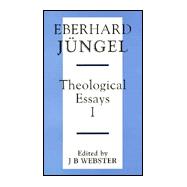
Finally, William of Baskerville suggests that these books about unicorns and other mythical creatures do not speak of “real existence” but of “possible existence.” He goes on to suggest that instead of reading with the virtue of faith, we should learn to read with the virtues of hope and love. These are profound statements full of rich possibilities. To explore them, I turn now to one of Eberhard Jüngel’s most important essays, “The World as Possibility and Actuality: The Ontology of the Doctrine of Justification” (Theological Essays I, pp. 95-123).

Jüngel’s thesis is that while Aristotle understood actuality to be ontologically superior to possibility, Christianity gives ontological priority to possibility on the basis of the doctrine of justification, i.e., resurrection, the new creation, the eschatological creatio ex nihilo. We must understand the world not only as a created actuality, “but—out of the resurrection of the dead—as creation out of nothing.” He goes on to say:
Theology must establish that the radical nothingness of Good Friday is the other dimension of the being of the world. . . . Theology does this by establishing the distinction between the possible and the impossible as incomparably more fundamental than the distinction between the actual and the non-yet-actual. Where the distinction between the possible and the impossible is made, we are concerned with truth (as opposed to actuality). The distinction between the possible and the impossible is incomparably more fundamental because it concerns the distinction between God and the world. (110-11)
Jüngel argues that God is to be defined on the basis of God’s justification of the ungodly “as the one who makes the possible to be possible and the impossible to be impossible.” This act of distinguishing possibility from impossibility is rooted in God’s new creation out of nothing. God “leads the world back to nothingness and makes it anew out of nothingness” (113). This is an event of the Word, and as such it is an eschatological event. God’s decision is an act of grace which refuses to let the world define itself. Rather than let the future be something of the world’s own making, God interrupts the world and makes the world anew, thus giving the world a new future which is the world’s death and resurrection. Jüngel rejects the well-worn notion that we are living between the “already” and the “not yet,” because this still assumes the ontological priority of the actual over the possible (101-03). Jüngel instead prefers the distinction between the “actual” and the “possible,” because whereas the “actual” is something which we are able to bring about through our own acts of human righteousness, the “possible” is something which God alone can bring about in the apocalyptic word-event of death and resurrection.

Like William, though in a much stronger and more theological way, Jüngel gives priority to “possible existence” over “real existence.” And also like William, Jüngel connects this to the virtues of hope and charity. He writes first about hope:
From a theological point of view, “hope in” a particular future worldly actuality is the exact opposite of the kind of hope in God alone which hopes for a future for the world. The future actuality of the world is not a matter of hope; it is made. It belongs to the context of worldly action; it is a matter of calculation and cannot do with hopes any more than we can work with hope in constructing an aeroplane or in pursuing historical-critical inquiry into the past [!!]. The future actuality of the world is something which can be made. . . . Over against this kind of hope in the future actuality of the world which is always grounded in the world’s actuality, the justified hope in God alone for themselves and for the world. In such hope believers are righteous, for in it faith becomes an event which alone in this world participates in God’s distinction between the possible and the impossible. . . . By faith in the word of the cross, the world, through those who believe, comes to share in the divine distinction of the possible from the impossible. . . . Where the absolutizing of the dimension of actuality is overcome . . . the world is more than its own habitus; it is creation. (114-15)
True hope is a hope in God alone. We cannot properly hope about something which we ourselves bring about out of our own resources. Hope does not concern actuality but instead possibility. Theological hope is an event of faith in response to the justifying word of the cross. Unlike Adso and William, Jüngel is thus able to integrate faith into hermeneutics, insofar as faith is concerned with “possible existence,” with hope, and not “real existence,” with actuality. Jüngel then expands faith and hope to include love, and here I quote him at length:
In essence, the consequence of what has been proposed is the dismantling of the claim that actuality is prior to possibility, since the distinction between the possible and the impossible . . . is more necessary than that between the actual and the not-yet-actual. In actuality that which is already actual is at work as an act, which as such always proceeds from the past. . . . But in the distinction between the possible and the impossible, being is distinguished from nothingness. Such a distinction comes out of the future. . . . When the possible is distinguised [sic] from the impossible in such a way that the possible becomes possible and the impossible becomes impossible, then there occurs something like an origin—whether it be an origin in the beginning or at the end: in both cases it is God’s freedom as love which makes the possible to be possible. In the very concept of creation it is essential to set God’s love over against his omnipotence. God’s omnipotence concerns actuality, God’s love concerns possibility. God’s love concerns the being which is in becoming.

. . . [T]hat which God’s free love makes possible has ontological prevalence over that which God’s omnipotence makes actual through our acts. . . . As future, possibility is the concrete way in which the world is determined by nothingness, out of which God’s creative love lets being become. What can be made of the future on the basis of past and present, does not belong to the dimension of possibility; rather, as that which is not-yet-actual, it belongs to the dimension of actuality. . . . We make actuality out of that which is actual. We change, we transform. In this way, we make the future. God, however, is not one who transforms; he is the creator, who allows possibility to move towards actuality. But this possibility arises from the divine distinction between the possible and the impossible, arises, that is, ex nihilo. The world’s possibility is not within but external to its actuality. And its being is external to its futurity.
I do not have the space here to fully explicate this passage. Suffice it to say for now that Jüngel grounds the justifying event of the word in divine love. God’s love is that which brings about the new creation ex nihilo. God’s love comes to us from God’s future—that is, from outside ourselves. Because the justifying and creative love of God is external to us, it is something for which we can only hope. The new possibilities opened up by God come to us in the kerygmatic word of our justification—the word of cross and resurrection, of death and new life. As such, these new possibilities come to us as an event of faith, hope, and love. In the act of faith, we hope in God alone for ourselves and for the world. We hope in the love of God which distinguishes between the possible and the impossible for the sake of actualizing the new creation. We hope in the God who disrupts our being incurvatus in se—curved in upon our actuality—and thus lets our being become. In the apocalyptic love of the God whose being is in becoming, we too are beings-in-becoming who can live out of future possibilities, rather than out of past and present actualities. The being of humanity and the being of the world are thus ontologically grounded in the eschatological act of justification. In the event of Jesus Christ, God interrupts the actuality of the world, creates us anew ex nihilo, and sets us free for new possibilities.

What does this philosophical and dogmatic discussion of the ontology of justification have to do with Umberto Eco and biblical hermeneutics? Simply this: when we read out of a basis in the doctrine of justification, we are liberated from the need to find a correspondence between the literal text and the cultural-historical past. Such a pursuit presumes the ontological priority of actuality over possibility. Like Adso, those Christians who seek to ground the biblical descriptions of, for example, Joshua’s long day or the ten plagues of Egypt or Jesus bringing Lazarus back from the dead after three days in historical actualities are failing to acknowledge the ontological priority of possibility over actuality. They are in pursuit of actuality rather than truth. To allude to another of Jüngel’s essays, they prove themselves incapable of reading Scripture as “metaphorical truth,”—as language which speaks of actuality “in such a way that an increase of being [i.e., possibility] comes to speech” (Theological Essays I, 70). Scripture does not simply record actuality; it is rather the witness to an ongoing event of divine self-revelation in which the possible takes precedence over the actual. Holy Scripture is the human testimony to the apocalyptic act of divine love which distinguishes between the possible and the impossible. The prophets and apostles are not testifying to a particular actuality, because they are not testifying to something that can be “made” or empirically verified. Scripture instead testifies to what can only become—to what is eschatologically new—since it comes from God alone. Scripture testifies to what is outside ourselves, outside of the world, in the eschatological future of God alone.

When we read Holy Scripture from outside ourselves, from our justified being-in-Christ, we are able to read with the theological virtues of love, faith, and hope. First, we read with a “hermeneutics of charity,” as William says, “toward those who believed in good faith that the possible was.” Those human witnesses faithfully testified to God’s self-revelation, even if the possible remains future, and was never an actuality in the past. This same love comes from the God who first loved us in Jesus Christ, and who continually justifies us as an act of love, drawing us outside of our actuality and toward divine possibilities of new life. We read properly when we read with the eyes of this love which calls new life into being out of nothingness. We read with love because love “rejoices in the truth” (1 Cor. 13:6). And because love also “believes all things” and “hopes all things” (1 Cor. 13:7), a hermeneutics of charity forms the basis for a hermeneutics of faith and hope.

Second, we read with a “hermeneutics of faith” in the God who distinguishes between the possible and the impossible, who prioritizes possibility over actuality. A hermeneutics of faith asserts “what God’s love has made possible” (119). We therefore read with faith in the one who brings new life out of death, who went to the cross for our transgressions and was raised for our justification (Rom. 4:25). We read with faith that God will continue to disrupt our actuality in the word of the resurrection. We read with faith that the possible which the prophets and apostles testified to in their own fallible and broken ways will “move towards actuality” in the creative presence of the triune God. We read with faith that the interpretations of revelation recorded in Scripture were elected, guided, commandeered, and sanctified by the providential and gracious love of God. Finally, we read with faith that our own interpretations of Scripture will themselves faithfully witness to the God who justifies the ungodly.

Third, we read with a “hermeneutics of hope” that what the prophets and apostles eschatologically imagine in the biblical text will become manifest in the coming visio Dei. We read in the hope that our faith will become sight. Both historical critics and fundamentalist apologists are blind in that both are bound to the priority of actuality over possibility and seek to subvert or establish correspondences between the text and the historical past. A hermeneutics of hope enables us to read in anticipation of and in the light of God’s eschatological future, which is also our future and the future of the world. While Scripture testifies in its own way to what God has done—viz. disrupt the world in the justifying event of Christ’s death and resurrection—we must interpret what God has done with an eye toward what God is doing—viz. disrupting us today in our bondage to actuality through the word of the cross—and will do—viz. “from outside and from nothing” (117) make fully manifest “what God’s love has made possible.” We read in the hope that comes from God’s future and opens us up toward that ever new future which never becomes past. We read with the hope grounded in God’s being-in-becoming. We read in the hope that the historical fissures in the text will one day be mended in the Spirit’s reconciling embrace. We read in the hope that beyond all signifying signs we will one day encounter the “individual unicorn.” We thus hope in the God who encounters and interrupts us as we read and interpret. We hope in the God who will one day encounter us anew so that we will no longer “see in a mirror, dimly,” but rather “we will see face to face” (1 Cor. 13:12). And then, in that beatific moment, beyond all signs and veils, we hope that we will see the one Unicorn, Jesus Christ, as he truly is, however black and ugly, crucified and bloody, he may be.

Jumat, 20 Juni 2008

Demythologizing the Divide between Barth and Bultmann

NB: This essay was originally published in a smaller form as part of the 2008 Karl Barth Blog Conference. The conference focused on Eberhard Jüngel’s monograph on Barth’s doctrine of the Trinity, God’s Being Is in Becoming. In my contribution, I seek to explore Jüngel’s radical thesis that Barth and Bultmann are striving toward the same idea: that God, as an historical event, is God for us. Sergi Avilés, researcher in chief in philosophy and theology at Centre Borja, wrote a response to my essay.


Demythologizing the Divide between Barth and Bultmann: Jüngel’s Gottes Sein ist im Werden as an Attempt toward a Rapprochement between Karl and Rudolf

1. The Mythology

The debate between Barth and Bultmann has long since passed into the realm of myth. Today, we all too often hear caricatures of each position: Barth was a theologian of the Word of God, while Bultmann was a theologian of humanity’s word; Barth upheld the objectivity and realism of Jesus Christ, while Bultmann collapsed everything into subjectivity and existentialism; Barth was captive only to God’s Word, while Bultmann was captive to Enlightenment rationalism and the idols of modernity. All too often, we are spoon-fed these fictitious figures in theology, though it is certainly Bultmann who receives the most abuse. He is the punching bag of conservatives everywhere for his project of demythologization, and specifically for his statements about the resurrection. Today, most people associate the name of Bultmann with a negative view about the resurrection, a negative view of the Bible, and a positive view of modern technology (i.e., the famous quote about the light bulb). We are thus led to echo Eberhard Jüngel’s question: “Why then are the most questionable interpretations of Bultmann preferred to an interpretation of Bultmann in good part (in bonam partem)?” (41).

While a much more complete analysis would need to look at the historical context for this debate in detail, here I only wish to sketch each theologian’s positions while reflecting on the way Jüngel mediates between the two sides in his seminal work, Gottes Sein ist im Werden (ET God’s Being Is in Becoming).1 My analysis will begin by briefly surveying the theological debate in Germany which precipitated Jüngel’s response. Then I will parse out Jüngel’s radical suggestion that “Barth accorded to his doctrine of the Trinity (1932) the same function which the programme of demythologising performs in the theology of Rudolf Bultmann” (34). I will conclude by arguing that this debate continues to have great significance for us today.

2. Braun and Gollwitzer

Jüngel sets his work in the context of a debate between Helmut Gollwitzer and Herbert Braun. Gollwitzer, who died in 1993, completed a doctorate under Barth in 1937 and was a highly regarded Barthian dogmatician. He was active in the Confessing Church, was a medic during World War II, and became a POW in the Soviet Union between 1945-49. He was also a Christian socialist and an outspoken critic of both capitalism and the Vietnam War. Braun, on the other hand, was a New Testament scholar, particularly on Qumran and the relation between the NT and its Jewish-Hellenistic context. He was influenced by Luther, Kant, and Kierkegaard, and falls within the broadly “existentialist” vein of NT interpretation. Hendrikus Boers notes that Bultmann commended Braun in 1960 “for consistently carrying through the intention of an anthropological, i.e., existentialist, interpretation of the New Testament.”2

The debate between Gollwitzer and Braun in the 1960s concerned the nature of God-talk. According to Jüngel, this is a later form of the same debate between Barth and Bultmann. Bultmann’s position is aptly summarized in the title of his 1925 essay, “What Does It Mean to Speak of God?” (Faith and Understanding, 53-65).3 His focus is on the nature of human speech about God. Barth’s position focuses, rather, on the nature of the God about whom we must speak. As Jüngel puts it: “for Bultmann, speech about God is the proper topic for investigation, whereas for Barth, the question concerns God’s being” (2). Labeling the former theological tendency “existentialist” and the latter “dogmatic” is not inaccurate, but neither is it helpful, insofar as it gives the impression that the two sides are incompatible.

Jüngel spends the majority of the time in the introduction to this book criticizing Gollwitzer, and one might accurately call God’s Being Is in Becoming the response to Gollwitzer’s book, The Existence of God as Confessed by Faith (ET 1965). The fundamental criticism that Jüngel levels against Gollwitzer is that he posits a bifurcation in God’s being between nature and will, between essence and existence. In other words, Gollwitzer inserts an ontological separation between “God-in-and-for-Godself” and “God-for-us,” between Deus in se and Deus pro nobis. Jüngel summarizes the issue in the following way:
Gollwitzer stresses that the mode of being of revelation . . . has its ground “not in the essence of God but in his will,” so that it is “not possible per analogiam to argue back from it to the essence of God in the sense of how God is constituted, but only to the essence of his will, i.e., from his will as made known in history to his eternal will as the will of his free love.” (5)
Gollwitzer affirms that God ad extra reveals God ad intra, but he rejects the notion that God’s historical acts reveal God’s eternal being; instead, they only reveal God’s eternal will. Gollwitzer backs away, then, from the work of theological ontology. He does this in order to preserve God’s freedom, which Gollwitzer secures by—as Jüngel puts it—“leav[ing] a gap in a metaphysical background to the being of God which is indifferent to God’s historical acts of revelation” (6). He separates the “essence of God” from the “essence of God’s will”: the former existing as the ontological ground of the latter, though otherwise having no obvious relation to it. The constitution of God’s eternal being is, therefore, static and unaffected by the acts of God in time and space. Unfortunately, in speaking about the “essence of God’s will,” Gollwitzer failed to speak correspondingly of the “will of God’s essence” (ibid.). By separating essence and will, he ends up creating an abstract hidden “God behind God,” in which case there is no guarantee that the God revealed in Jesus Christ is ontologically the same God who exists from all eternity.

While Jüngel sets up the Gollwitzer-Braun debate as a later form of the Barth-Bultmann debate, the rest of the work proceeds to argue that Barth’s own theology (1) rejects the split between essence and will found in Gollwitzer’s polemic against Braun and, consequently, (2) is far more in agreement with Bultmann than most theologians recognize. I will focus the rest of my attention in this essay on explicating the second part of Jüngel’s argument.

3. Demythologizing the Divide

According to Jüngel, Barth’s doctrine of the Trinity performs “the same function” in theology that Bultmann intended his program of demythologization to perform (34). In saying this, Jüngel does not mean to suggest that there are no lasting differences between Barth and Bultmann, only that the differences cannot be understood properly apart from the important similarities between them. Their seemingly contradictory approaches stem from the same basic intention: to ensure that our talk about God is truly talk about God. I will first look at Barth’s doctrine of the Trinity and then examine Bultmann’s program of demythologization as Jüngel interprets each.

3.1. Barth’s Doctrine of the Trinity

As Jüngel understands it, Barth’s doctrine of the Trinity “concerns the being of the God who reveals himself” (36). The doctrine of the Trinity is an attempt to understand the God we encounter in revelation. In the event of God’s self-revelation, we encounter the Son, Jesus Christ, and through him the Father, and with him the Holy Spirit. God’s self-revelation is therefore a revelation of Father, Son, and Holy Spirit. While revelation is an event that occurs in the economy of grace, i.e., in relation to human persons, the triune modes of being are not confined to the economy. What we encounter in God’s movement ad extra is the selfsame God who exists through all eternity. Revelation is, in other words, “God’s self-interpretation” (27).
[A]s the self-interpretation of God, revelation is the root of the doctrine of the Trinity. Consequently, the doctrine of the Trinity is the interpretation of revelation and thus the interpretation of the being of God which is made possible by revelation as God’s self-interpretation. (ibid.)
In the event of God’s self-revelation, we discover that God is a being of unity-in-distinction, who exists as “the revealer, the revelation, and the revealedness” (28; CD I/1, 299). That is, in the event of revelation, we have to do with the very being of God. God’s eternal being is a being-for-revelation, a being-for-us. God encounters us in Word and Spirit, not as some secondary form of God, but as the eternal triune God in the unity of essence and existence, content and form, nature and will, being and act. The doctrine of the Trinity prevents the triune reality of revelation from becoming, as Barth says, “an economy which is foreign to his essence” (35; CD I/1, 382). Jüngel summarizes the implications of Barth’s doctrine well: “If revelation is God’s self-interpretation, then in revelation God interprets himself as the one who he is. . . . Therefore the dogma of the Trinity is the appropriate expression for the being of God. It protects the Christian doctrine of God from becoming mythological or slipping into metaphysics” (33).

Barth’s doctrine of the Trinity thus serves a “critical and polemical function” in theology, a function which Jüngel argues “has not been considered adequately” (34). First, Barth’s doctrine rejects subordinationism. The heresy of subordinationism distinguishes the Son and/or the Spirit from the Father, making the former subordinate in some sense to the latter. Barth rejects this view of the Trinity because it undermines the single subjectivity of God by introducing a creaturely distinction between a “more” and a “less” within the Godhead. By differentiating between God and God, between the true part of God and the lesser parts of God (or perhaps the greatest parts of creation), subordinationism objectifies God—i.e., it compromises God’s lordship and makes the Trinity an object “we can survey, grasp and master” (CD I/1, 381). Subordinationism turns the God who confronts us as Thou into an It; it replaces second-person address into third-person analysis. According to Barth, however, “the One who reveals Himself according to the witness of Scripture does not become an It or He, but remains Thou” (ibid.). Any alternative to the Trinity as a single subject who, in all three eternal modes of being, is the true God and Lord is an objectification of God which gives the human person control over the divine being. It turns God into a creature to be examined rather than the Lord to be worshiped.

Second, Barth’s doctrine of the Trinity rejects modalism. The heresy of modalism states that the three modes of God ad extra are in fact “alien to God’s being as God” (CD I/1, 382). That is, there is a true God behind and above the three moments of Father, Son, and Spirit that we encounter in revelation. If subordinationism makes the Father the true God behind the Son and the Spirit, then modalism goes one better and posits a divine essence behind all three persons or modes of God’s triune existence in the economy of grace. Also, like subordinationism, modalism involves “an objectifying of God,” in which “the divine subjectivity is sucked up into the human subjectivity which enquires about a God who does not exist” (ibid.). Modalism is a denial of the God who encounters us in revelation in an attempt to discover some abstract deity which is available for human persons to manipulate and control. Modalism and subordinationism are, therefore, both efforts to master God, to place God at one’s disposal, either by undermining God’s single subjectivity in revelation or by going behind God’s revelation altogether to uncover some abstract entity.

Against both subordinationism and modalism, Barth argues that the burden of the doctrine of the Trinity is to articulate how God is both “our God” and “our God,” that is, both Lord over all and God with us (ibid., 383). The heresies seek to ensure that God is with us, but only by denying God’s Lordship; however, this means that it is no longer God who is with us but instead merely ourselves. The doctrine of the Trinity states instead that
[God] can be our God because in all His modes of being He is equal to Himself, one and the same Lord. . . . And this Lord can be our God, He can meet us and unite Himself to us, because He is God in His three modes of being as Father, Son and Spirit, because creation, reconciliation and redemption, the whole being, speech and action in which He wills to be our God, have their basis and prototype in His own essence, in His own being as God. As Father, Son and Spirit God is, so to speak, ours in advance. (ibid.)
The doctrine of the Trinity states that God’s being-in-revelation (Deus ad extra) corresponds to God’s being-in-eternity (Deus ad intra). The God who is for us and with us in Jesus Christ is the true God from all eternity. For this reason, we can address God as “Thou.” God is truly a personal God who meets and confronts us. The person of Jesus Christ is not a secondary form of God or simply a mode confined to the economy, but is rather the eternal God incarnate. And this means that God “is both to be feared and also to be loved,” feared because God is truly God and loved because God is truly our God.

Barth’s doctrine of the Trinity precludes any objectification of God. His theology is set in polemical contrast to metaphysics and mythology, both of which are attempts to define God from a starting-point in anthropology. Against these modes of talk about God, Barth insists that we speak from a starting-point in revelation alone, always mindful that in revelation we encounter who God truly is from all eternity.

3.2. Bultmann’s Program of Demythologization

Jüngel argues that Bultmann’s program of demythologization plays a similar role in Bultmann’s theology as the doctrine of the Trinity does in Barth’s. Unlike Barth, Bultmann focuses on hermeneutics rather than on ontology; that is, he is concerned with how humans interpret and speak about revelation. This includes both the interpretation found within Scripture, as an authoritative form of human talk about God, and our interpretation of Scripture. Both forms of interpretation are existentialist in nature, meaning that we, like the biblical authors, talk about God from a particular anthropological perspective: Scripture talks about God from within the perspective of a “mythological world picture”; we talk about God as modern persons who are thoroughly, if often unconsciously, shaped by a scientific understanding of the cosmos.

All such talk, however, can easily reduce God into an immanent reality, an object within the limited sphere of our understanding. To the extent that one’s anthropological perspective “objectifies” God, such talk is mythological in nature. For this reason, Bultmann often clarifies the word “mythology” with the term “objectifying representations.” For him, mythology is an objectifying mode of discourse about the divine. This is precisely how Scripture often speaks about God, because of its pre-modern, pre-scientific understanding of the world. Though Scripture seeks to speak about the transcendent, it often ends up objectifying the divine because it is rooted in a particular anthropological situation. Scripture thus treats God like an immanent object, a being within the world as understood by those who talk about God.

According to Bultmann, in his 1941 essay on “New Testament and Mythology,” myth “talks about the power or the powers that we think we experience as the ground and limit of our world . . . within the circle of the familiar world, . . . within the circle of human life . . . Myth talks about the unworldly as worldly, the gods as human” (New Testament and Mythology, 9).4 To be clear, myth does not intend to speak in this way. Though it seeks to speak about the transcendent qua transcendent, myth speaks about the transcendent as immanent: “[myth’s] real intention to talk about a transcendent power to which both we and the world are subject is hampered and obscured by the objectifying character of its assertions” (ibid., 10). In an attempt to illuminate the divine, myth ends up illuminating the existential perspective of those who speak about the divine. In other words, “myth gives expression to a certain understanding of human existence” which is foreign to our own (ibid., 98). Any interpretation of mythology must, therefore, also be existential in nature. That is, the myth must be “translated” into our own contemporary context in order for the message to be rightly heard. Applied to Scripture, “the task, then, is also to interpret the dualistic mythology of the New Testament in existentialist terms” (ibid., 15). Despite its best intentions, Scripture speaks about God in thoroughly human terms, from a very particular existential perspective. Scripture must therefore be “translated” into our own anthropological situation for us to truly hear the kerygma. Hence, the need for a critical hermeneutics, i.e., a program of demythologization.

Contrary to a common misunderstanding, demythologization is not the elimination of mythology. This misunderstanding is itself understandable, given statements like the following: “We can only completely accept the mythical world picture or completely reject it” (ibid., 9). While Bultmann assumes that we already reject the mythical world picture represented in the biblical writings, he does not mean that demythologization is simply a process of excising such mythological ideas from the pages of Scripture. Bultmann explicitly rejects this as an old form of demythologization prominent during the nineteenth century, in which “with the elimination of the mythology the kerygma itself was also eliminated” (ibid., 11). If, back then, “the mythology of the New Testament was simply eliminated, the task today . . . is to interpret New Testament mythology” (ibid., 12). The goal of interpretation is to enable us to hear the kerygma for what it actually is:
Demythologizing seeks to bring out the real intention of myth, namely, its intention to talk about human existence as grounded in and limited by a transcendent, unworldly power, which is not visible to objectifying thinking. Thus, negatively, demythologizing is criticism of the mythical world picture insofar as it conceals the real intention of myth. Positively, demythologizing is existentialist interpretation, in that it seeks to make clear the intention of myth to talk about human existence. (ibid., 99)
Despite its negative appearance, demythologization, as Bultmann defines it, is primarily a positive attempt to interpret Scripture for the sake of hearing the kerygma as modern persons. In other words, demythologization seeks to let the transcendent remain transcendent—i.e., to let God remain God—for those who no longer accept a “mythological world picture.” A common criticism of Bultmann is that he reduces theology to anthropology and makes the transcendent into the immanent. But this is precisely what he seeks to overcome. The program of demythologization does not reduce God to us, but interprets Scripture so that we, as modern persons, know that God is indeed for us.

3.3. Barth and Bultmann: Friends or Foes?

The theological “friendship” between Barth and Bultmann becomes clear when we see that both the doctrine of the Trinity and the program of demythologization intend, to use Barth’s terminology, to show that God is both “our God” and “our God.” In order to ensure that we are indeed speaking about God, each position is set in polemical opposition to both mythology and metaphysics, because both objectify God—they turn God into an object under our control. As Jüngel says, Barth’s doctrine of the Trinity “protects the Christian doctrine of God from becoming mythological or slipping into metaphysics” (33). The same can be said of Bultmann’s demythologization. In a 1952 essay, Bultmann further defines myth in a way that demonstrates the affinity between mythology and metaphysics:
[M]yth talks about this transcendent reality and power inadequately when it represents the transcendent as spatially distant, as heaven above the earth, or as hell beneath it. It talks about the transcendent powers inadequately when it represents them as analogous to immanent powers and as superior to these powers only in force and unpredictability. . . . Myth talks about gods as human beings, and about their actions as human actions . . . Myth thus makes the gods (or God) into human beings with superior power, and it does this even when it speaks of God’s omnipotence and omniscience, because it does not distinguish these qualitatively from human power and knowledge but only quantitatively. (NTM, 98-99)
According to Bultmann, myth speaks about God as quantitatively, rather than qualitatively, distinct. God becomes a human being “with superior power,” not a truly transcendent being. This kind of quantitative distinction between God and humanity constitutes the nature of metaphysics. In the three classical modes of metaphysical thinking, one talks about God by first talking about something else, namely, humanity: in via causalitatis, one begins with a creaturely reality and then posits a supernatural cause (God as first cause or unmoved mover); in via negativa, one begins with a human attribute and then negates it (God is infinite or immortal); in via eminentiae, one begins with a human attribute and then raises it to the level of infinite perfection (God as omnipotent or omniscient). In each case, the attribute ascribed to God remains part of the creaturely realm. One cannot truly speak about God by first speaking about creatures. On this point, both Bultmann and Barth agree as dialectical theologians who understand God first and foremost as the Wholly Other. And each person’s contribution is thus set in opposition to such mythological-metaphysical thinking.

What, then, is the abiding difference between these two theologians? We can begin by first identifying the points of agreement: (1) both theologians intend to speak about God as our God, as one who is both Wholly Other and wholly pro nobis; (2) both theologians reject mythology and metaphysics as improper modes for thinking about God and set their own theologies in opposition to them; and (3) both theologians seek to let us hear the kerygma, the Word of God, anew in our contemporary context. In other words, neither theologian divorces the objective from the subjective: Barth does not speak about the theological at the expense of the anthropological, nor does Bultmann speak about the anthropological at the expense of the theological. Barth intends, via his doctrine of the Trinity, to articulate how the relation between God and humanity in revelation is grounded in the eternal being of God. Bultmann intends, via his program of demythologization, to articulate how the relation between God and humanity in revelation is not merely a mythological relationship but is grounded in the kerygma. Both theologians, in other words, ground theology and anthropology in the event of Jesus Christ. Consequently, the mythological division between the two outlined at the start of this paper proves to be vacuous. As Jüngel states, “The difference between the theology of Karl Barth and that of Rudolf Bultmann is therefore not grounded in the fact that Barth’s theological statements leave out of account the anthropological relation given in revelation, whereas Bultmann, by contrast, dissolves theological statements into anthropological statements. Such descriptions label the theology of both theologians superficially and so fail to understand them at all” (73).

But a difference remains. In what follows, I will parse Jüngel’s understanding of the difference before offering some comments on whether there remains room for a greater “friendship” between these two theologians. Jüngel begins by stating:
The difference [can] be seen in the fact that Barth believes that a distinction must be made between God’s being-as-object in his revelation as “secondary objectivity” and a “primary objectivity” in the innertrinitarian being of God which makes possible this “secondary objectivity,” whereas Bultmann holds that the question of the possibility of revelation (which is grounded in God) is forbidden. (ibid.)
Jüngel is correct to notice a sharp difference here regarding the Trinity. For Barth, the question of divine ontology is necessary on the basis of revelation. For Bultmann, divine ontology is always an objectification of God. Two quotes are important for Bultmann: from Melanchthon, “To know Christ is to know his benefits, not to contemplate his natures and the mode of his incarnation”; and, from Wilhelm Herrmann, “We cannot say of God how he is in himself but only what he does to us” (NTM, 99). According to Bultmann, “we cannot talk about God or what transcends the world as it is ‘in itself,’ because in doing so we would objectify God or the transcendent into an immanent, worldly phenomenon” (ibid.). His basic point is that we only know God as God relates to us, as God encounters us in revelation. We only know God for us. To speak about God-in-and-for-Godself, as divinity in the abstract apart from revelation, is to return to “objectifying representations.” Why? Because if God truly transcends all human speech about God, then talk about God in se is inevitably talk about humanity—i.e., it is inevitably metaphysics, and thus mythology. While Barth is also opposed to ontology as the pursuit of a system of being within which one may include God (76), he is nevertheless convinced that we must do the work of theological ontology when revelation demands it. Bultmann, however, remains convinced that all divine ontology is finally mythology, in the sense that such ontology requires metaphysics to get it up and running (at least he understands it).5 We can see how the Braun-Gollwitzer debate is at heart a continuation of this basic distinction.

This difference might seem to be the end of the story, but it isn’t. In fact, the difference may actually be located somewhere else entirely. Jüngel goes on to complicate and illuminate the distinction between these two thinkers, and here I quote him at great length:
In order to reach agreement, it is necessary to perceive that in asking about the possibility of revelation, Barth does not seek to reach behind revelation by transcendental questioning, but rather sees himself induced to make his inquiry on the ground of revelation. But then he cannot leave out of account the fact that all further theological statements are anthropologically relevant. Nevertheless, for Barth, the anthropological relevance of theological statements is not the criterion of their truth. The criterion of the truth of theological statements is, for Barth, given in the fact that in all theological statements the freedom of the subject of the revelation remains safeguarded. Conversely, for Bultmann, the anthropological relevance of theological statements is the criterion of their truth because, for him, revelation is always an eschatological occurrence which as such becomes an event in an historical (historisch) “that.” It is a matter of the “paradoxical identity” in which an historical (historisch) “that” becomes historically (geschichtlich) meaningful as eschatological event. Bultmann insists on the “est” of this paradoxical identity, whereas for Barth, in accordance with the distinction between God’s “primary” and “secondary objectivity,” God himself has actually come into the picture, but “only” in his work which points to him as a sign. For Barth, even Jesus’ humanity is in this sense a “sacramental reality,” a parable. What finally separates Barth from Bultmann is the same reservation which Barth also has towards Luther’s teaching on the Lord’s Supper: God’s presence in the parable of sacramental reality must not lead to an equation between God and our reality, if God is not to be objectified. The intention which bound Barth and Bultmann together in their common beginnings has thus remained unchanged in both. On the other hand, the ways of thinking which led both theologians to move away from each other are fundamentally distinct. The problem of the relation of Barth’s theology to that of Bultmann can only be set out with systematic adequacy through a contrast between “analogy” and “paradoxical identity.” (73-74)
This analysis—remarkable for its brevity and depth of insight—has much to commend it. Jüngel’s suggestion that the divide between Barth and Bultmann can be understood as a divide between the concepts of “analogy” and “paradoxical identity” or between a Lutheran and Reformed doctrine of the Lord’s Supper is one that remains almost entirely unexplored, and unfortunately I won’t be able to comment on it at any length in the present discussion. What concerns me here is the distinction that Jüngel articulates between the two criteria for evaluating the truth of theological statements. According to Jüngel, Barth’s criterion is the freedom of God, while Bultmann’s criterion is the anthropological relevance, i.e., its relation to us in the present-tense. Bultmann’s interest in the kerygma’s existential relevance leads him to posit a “paradoxical identity” between the historical event of Jesus of Nazareth and the eschatological kingdom of God. Barth’s interest in the freedom of God, by contrast, leads him to posit an analogical relationship between historical-creaturely reality and the reality of God. Analogy is here understood in the classical sense of “a still greater difference in the midst of such great similarity,” to use Jüngel’s definition from God as the Mystery of the World.

Both Bultmann and Barth are dialectical theologians who understand God as the Wholly Other, but Bultmann interprets the event of revelation as the primary reality of God, whereas Barth—on this point, closer to Gollwitzer—interprets the event of revelation as the secondary reality of God. As Jüngel rightly points out, this does not mean that God’s “primary objectivity” is somehow abstracted from revelation. On the contrary, Jüngel points out that Barth’s entire dogmatics is a “thorough exegesis” of the axiom that “God corresponds to himself” (36). God’s being-in-revelation corresponds to God’s being-in-eternity. Revelation is therefore God’s self-interpretation.

Jüngel’s analysis of Barth and Bultmann, however brilliant, does not quite go far enough. In the final, more constructive section of the book, Jüngel discusses Barth in relation to Gollwitzer. Here he presents some thoughts regarding God’s being-in-becoming which might help to bridge the differences between Barth and Bultmann outlined earlier in the book. Jüngel queries the logic in Gollwitzer’s attempt to affirm both that “God is in and for himself” and that “God is for us” (104-07). He discovers that Gollwitzer’s position falls apart, in that he has maintained a classical substance ontology for God ad intra while attempting to join this with a relational ontology of event for God ad extra. There is, therefore, an ontological split between the economic and immanent Trinity in Gollwitzer’s doctrine of the Trinity. This is precisely what Barth seeks to overcome.

Against Gollwitzer, and following the insights of Barth’s mature doctrine of reconciliation, Jüngel proposes that we think of God “in a thoroughly historical way” (107), so that God’s freedom is a freedom for revelation and reconciliation. On the basis of the event of revelation, “God’s being is originally event” (ibid.). Since this event is an historical event, God’s being is “historical being” (109). According to Jüngel, “we must in any event formulate God’s historicality” (ibid.), and this involves thinking ontologically about God on the sole basis of the historical event of revelation in Jesus of Nazareth. As a result, insofar as we think about God on the basis of God’s self-reiteration and self-interpretation in revelation, God’s being is “not only able to bear historical predicates (despite their unsuitability) but also requires them” (110). God is “historical being,” because God’s being is grounded in and defined by the concrete event of revelation. This does not mean that God is constituted by the other with whom God enters into covenant fellowship. But it does mean that God from all eternity is constituted for the sake of the Christ event. God simply is an historical event. God is eternally historical in that God has eternally elected this man Jesus and thus made space within God’s being for this particular historical predicate. The Logos, as Barth says, is the “stop-gap” for Jesus (113). In saying this, Barth has removed every last vestige of metaphysics, so that, unlike Gollwitzer, there is no separation between essence and existence in the being of God.

The triune being of God thus has a double relationality: God enters into relation with another because God’s being “is a being related to itself” (114). This most certainly does not mean that God ad intra is “in and for Godself” while God ad extra is “for us.” On the contrary, both aspects of God’s being are pro nobis, the one in actuality (ad extra) and the other by way of anticipation (ad intra). And so, as Jüngel says, the doctrine of the Trinity “understands God’s self-relatedness in his modes of being, not as a kind of divine ontological egoism, but rather as the power of God’s being to become the God of another” (ibid.). In other words, both aspects of God’s relationality are in becoming; both are aspects of God as historical event. “God’s being cannot be considered in abstraction from the becoming proper to his being, just as, conversely, this becoming cannot be understood either as a ‘contingent illustration’ of the divine being or as something different from the divine being” (115). Jüngel follows this comment by remarking, almost in passing, that in this affirmation and the corresponding rejection of a phenomenology of the divine being, “Bultmann may stand nearer to Barth than to any philosopher” (ibid.).

I want to suggest that Bultmann and Barth—at least the later Barth—indeed stand together. They may not sing the same melody, but they at least sing in harmonious counterpoint. While it does not become immediately clear in Jüngel’s fine treatment of Barth’s theology, the basis for a rapprochement between Karl and Rudolf can be found in this short monograph—a reunion that is only strengthened by Jüngel’s later work, God as the Mystery of the World. The important concept in that work, which is crucial to this debate, is the notion of the “humanity of God,” an idea that Barth himself only takes up late in his career, most notably in the lecture from 1956. There he says the following, in criticism of his own earlier theology:
[I]t was pre-eminently the image and concept of a “wholly other” that fascinated us and which we, though not without examination, had dared to identify with the deity of Him who in the Bible is called Yahweh-Kyrios. We viewed this “wholly other” in isolation, abstracted and absolutized, and set it over against man, this miserable wretch—not to say boxed his ears with it—in such fashion that it continually showed greater similarity to the deity of the God of the philosophers than to the deity of the God of Abraham, Isaac, and Jacob. . . . We did not believe nor intend any such thing. But did it not appear to escape us by quite a distance that the deity of the living God—and we certainly wanted to deal with Him—found its meaning and its power only in the context of His history and of His dialogue with man, and thus in His togetherness with man? Indeed—and this is the point back of which we cannot go—it is a matter of God’s sovereign togetherness with man, a togetherness grounded in Him and determined, delimited, and ordered through Him alone. . . . Who God is and what He is in His deity He proves and reveals not in a vacuum as a divine being-for-Himself, but precisely and authentically in the fact that He exists, speaks, and acts as the partner of man, though of course as the absolutely superior partner. He who does that is the living God. And the freedom in which He does that is His deity. It is the deity which as such also has the character of humanity. . . . It is precisely God’s deity which, rightly understood, includes his humanity. (The Humanity of God, 44-46)6
According to Barth, “there may be godless humanity, but there is no God without humanity,” no “humanless God,” so to speak (137). To say God is also to say humanity, because the being of God includes the being of humanity as that which God elects from all eternity in the person of Jesus Christ. There is no God behind or before the God who exists as the covenant partner of humanity. As a result, God is most truly God when God becomes human in Jesus of Nazareth, and God is most truly divine when God goes into the far country and dies for the sake of humankind. As Jüngel would say, God’s being is located in the event of Jesus’ death and resurrection. In short, God’s deity includes humanity, and God’s freedom is the freedom to be human.

Barth’s doctrine of the humanity of God offers the basis for a rapprochement with Bultmann. The earlier division between the criteria of God’s freedom and anthropological relevance is now so heavily qualified as to be almost nonexistent. God’s freedom is the freedom to be anthropologically relevant, not only in Jesus himself but in the ongoing proclamation of the gospel as an event of the Word of God. Bultmann’s “paradoxical identity” of the human Jesus with God is no longer an objectification of God, because this humanity is itself constitutive of what it means to be God. The deity of God includes this—and therefore all—humanity. If God is by nature an historical event, then human history is not located only in God’s “secondary objectivity.” The humanity of God is not found “‘only’ in his work which points to him as a sign,” as Jüngel says (74). God’s eternal being includes and can therefore be identified with the historical event of Jesus. Moreover, the distinction between primary and secondary objectivity, prominent in Barth’s doctrine of God, fades from view in his later doctrine of reconciliation. The point is that “God [can] not be conceived as God without humanity; conversely, God . . . always [has] to be brought to speech with the concept of humanity” (105). It is this idea “that Gollwitzer wants to prevent” (ibid.), but it is precisely here that Barth and Bultmann finally stand together in unison. The door to both mythology and metaphysics remains closed for both, so that, as Schubert Ogden states, “the only man and God we know anything about are, in the words of Emil Brunner, a ‘man-who-comes-from-God’ and a ‘God-who-is-turned-toward-man’” (Christ without Myth, 153).7 There can be no talk of “God’s being in and for itself” if this means God apart from or without humanity. Similarly, as Barth says, “we do not have to reckon with any Son of God in Himself, with any logos asarkos, with any other Word of God than that which was made flesh” (CD IV/1, 52).8 On the contrary, there is only “God for us,” the God who elects to live together with humanity, the God who is an historical event, the God who becomes human—the God whose being is truly in becoming.

4. Conclusion: The Debate between Barth and Bultmann and Its Contemporary Significance

The debate between Barth and Bultmann continues. The attempt here to argue that Jüngel’s analysis offers substantial grounds for a rapprochement between the two theologians does not mean there are not still serious disagreements. I am suggesting, however, that the mythology surrounding their divide has more to do with form than content: Barth is primarily a dogmatician, while Bultmann is primarily a biblical exegete; Barth focuses on theological ontology, while Bultmann focuses on hermeneutics; Barth rejects the view that Scripture is mythological, while Bultmann assumes this, based on rather different definitions of “myth.” Moreover, each theologian is inconsistent at times and, like all polemical thinkers, tends toward one side more than the other. So Barth often uses language that sounds like God has an abstract divine freedom rooted in a doctrine of God’s being in-and-for-itself, while Bultmann sometimes collapses theology into anthropology, even saying that Paul’s theology “is most appropriately presented as the doctrine of man,” when his position logically supports calling Paul’s theology a doctrine of God, as Ogden rightly notes (Christ without Myth, 148). The point is not that these two theologians always speak harmoniously but that the substance of their mature positions need not be viewed as contradictory. I argue, in fact, that Barth and Bultmann are essentially in agreement about the fundamental nature of the gospel message and what it means for God and humanity, even if they approach it from different angles and for different purposes.9

Just as important as the original debate—and its later instantiation in the conflict between Braun and Gollwitzer—is the ongoing significance of this historical dispute. Demythologizing the divide between Barth and Bultmann is not enough. We must continue to “think after” God’s self-revelation today in the context of contemporary arguments in which the being of God is at stake. The objectification of God remains a constant danger. Currently, we are witnessing a third phase in the dispute between (the early) Barth and Bultmann, this time between Bruce McCormack and those who disagree with his position on the logical relation between election and the Trinity in the now infamous essay, “Grace and Being.” The same basic issues are being addressed, viz. the nature of divine freedom and the relation between the immanent and economic Trinity. The main difference is that the existentialism of Bultmann and Braun is not explicitly a part of the discussion, though it certainly lurks in the background. I will make no claims here about what the original debate means for this current dialogue about the doctrine of the Trinity, except to suggest that moving forward will require that we first look to the past. These debates are by no means new, and it behooves us to familiarize ourselves with those who have gone before us.

David W. Congdon
Princeton Theological Seminary
Princeton, NJ


_______________________

1. All citations will be taken from Webster’s English translation unless otherwise noted.

2. Hendrikus Boers, “Herbert Braun’s Quest for What is Essentially Christian,” JAAR 35, no. 4 (1967), 351.

3. Rudolf Bultmann, Faith and Understanding, trans. Louise Pettibone Smith (London: SCM Press, 1969).

4. Rudolf Bultmann, New Testament and Mythology and Other Basic Writings, trans. Schubert M. Ogden (Philadelphia: Fortress Press, 1984); hereafter cited as NTM.

5. While I stated at the beginning that Gollwitzer also avoids ontology, he does so in order to preserve divine freedom. He avoids speaking about God’s being on the basis of revelation in order to preserve a divine being apart from revelation. Against Barth, he separates God’s essence and will, confining revelation to the latter; against Bultmann, he continues to speak about God’s essence in the abstract, behind and apart from the event of revelation. Gollwitzer speaks about God without us, the God who is free to not be for us but only for Godself. Barth and Bultmann are united in rejecting this position, as Jüngel shows, but while Barth does speak about the divine being in the event of revelation, Bultmann refrains from such talk, focusing only on the hermeneutical question, not the ontological one.

6. Karl Barth, The Humanity of God (Louisville: Westminster John Knox, 1960).

7. Schubert M. Ogden, Christ without Myth: A Study Based on the Theology of Rudolf Bultmann (New York: Harper, 1961).

8. After citing this quote from Barth, Jüngel then quotes a lengthy passage from Hermann Cremer, in which he states: “Each distinction of this kind [i.e., between ‘ontological’ and ‘economic,’ ‘self-relation’ and ‘relation to the world’]—even of only a conceptual distinction—contains not merely no advancement or deepening of our knowledge of God, but works rather to the detriment of it, in that it then becomes almost impossible to hold fast to the fact that it is the essence—and, indeed, the whole essence—of God which in its revelation offers itself to us, and thereby opens itself to us. When God gives himself completely to us, and thereby becomes known by us, as he who is and will be completely for us, then there is nothing more beyond his revelation, even if eternity will not be long enough to exhaust everything that he is for us. But if in his actions he is everything which he actually is for us in his revelation, then he possesses no other attributes at all—neither ontological nor economic—than those which we perceive in his revelation” (120; quoted from Die christliche Lehre von den Eigenschaften Gottes, 19f.).

9. A monograph version of this essay would have to explore the relationship of Barth and Bultmann to the philosophy of Martin Heidegger. I would make the case that in order to fully understand this debate, one has to first understand Heidegger (not to mention Hegel). Ogden says that if “one is to understand Bultmann’s work, he must first understand Heidegger’s existential analysis” (Christ without Myth, 46). While true, I suggest that something similar holds for Barth. Not many people still know that Heidegger went through a shift in his understanding of metaphysics in the mid- to late-1930s. The shift involved moving from a modified metaphysics to an anti-metaphysical position, to the “overcoming” of “the onto-theo-logical nature of metaphysics.” Whereas metaphysics is the objectifying attempt of Dasein to “ground itself” in a supreme substance, Heidegger comes to realize that being is not a static essence but a dynamic “happening.” In other words, being is in act. Being is an “arriving,” a “taking place.” As James M. Robinson states, “The ‘being of beings’ is formulated ‘the arriving of what arrives.’ . . . The essence of being and the truth of being tend to converge in Heidegger’s focal understanding of being as an event of unveiling or revealing. . . . ‘Being’ is not a fixed concept, but an occurrence that happens to us, something that dawns on us.” There is a substantial similarity between the philosophy of the later Heidegger and the theology of the later Barth. In fact, Heinrich Ott argues that the later Heidegger is more in line with Barth than with Bultmann, who represents the earlier Heidegger. Many of Bultmann’s pupils, including Jüngel, have questioned this thesis, but the suggestion is an interesting one. In any case, the historical development of Heidegger’s thought, and the differing reactions to Heidegger by both Barth and Bultmann, need to be investigated in order to properly understand this debate over metaphysics, mythology, and the doctrine of the Trinity. For more on this, see James M. Robinson and John B. Cobb, Jr., eds, New Frontiers in Theology, Vol. 1: The Later Heidegger and Theology (New York: Harper, 1963).